
Top Signs You Need Garage Door Service – Don’t Ignore These
A garage door that takes two seconds longer to open than it did six months ago is not “just getting older.” That lag is usually a spring losing tension or a roller binding in the track, and it gets worse, not better, the longer you leave it. Most garage door failures in Blaine don’t announce themselves with a bang. They whisper first, in small changes that homeowners get used to week by week until the door quits entirely. Here are the signs worth acting on.
If you’d rather not crawl around a track with a flashlight, that’s fine. Call (877) 302-7764 and we’ll take a look.
Warning Sign 1: The Door Travels Unevenly
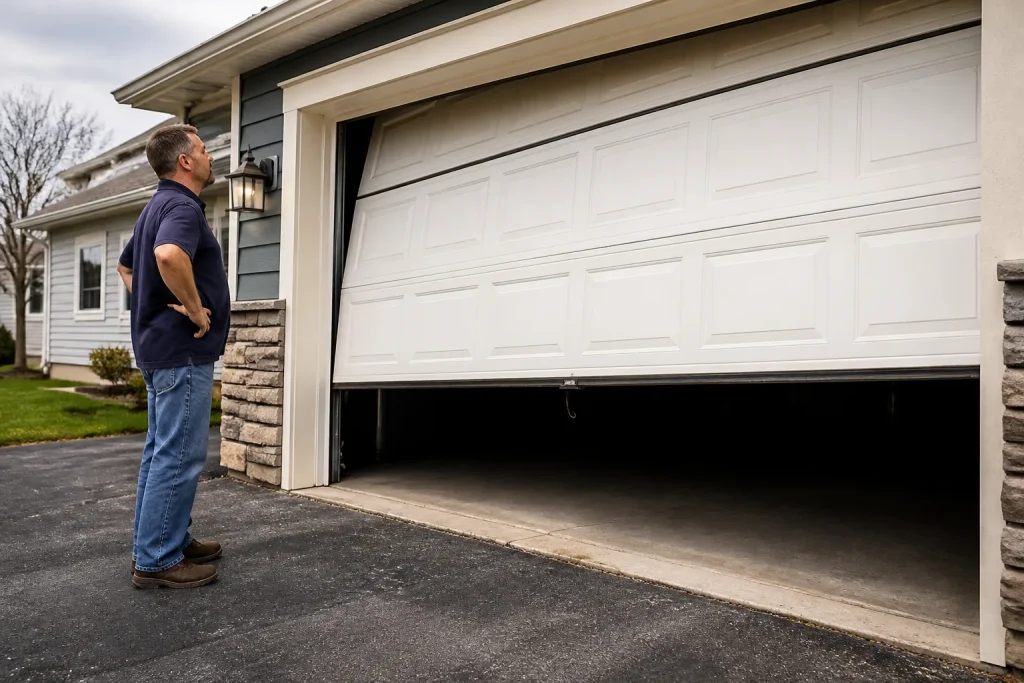
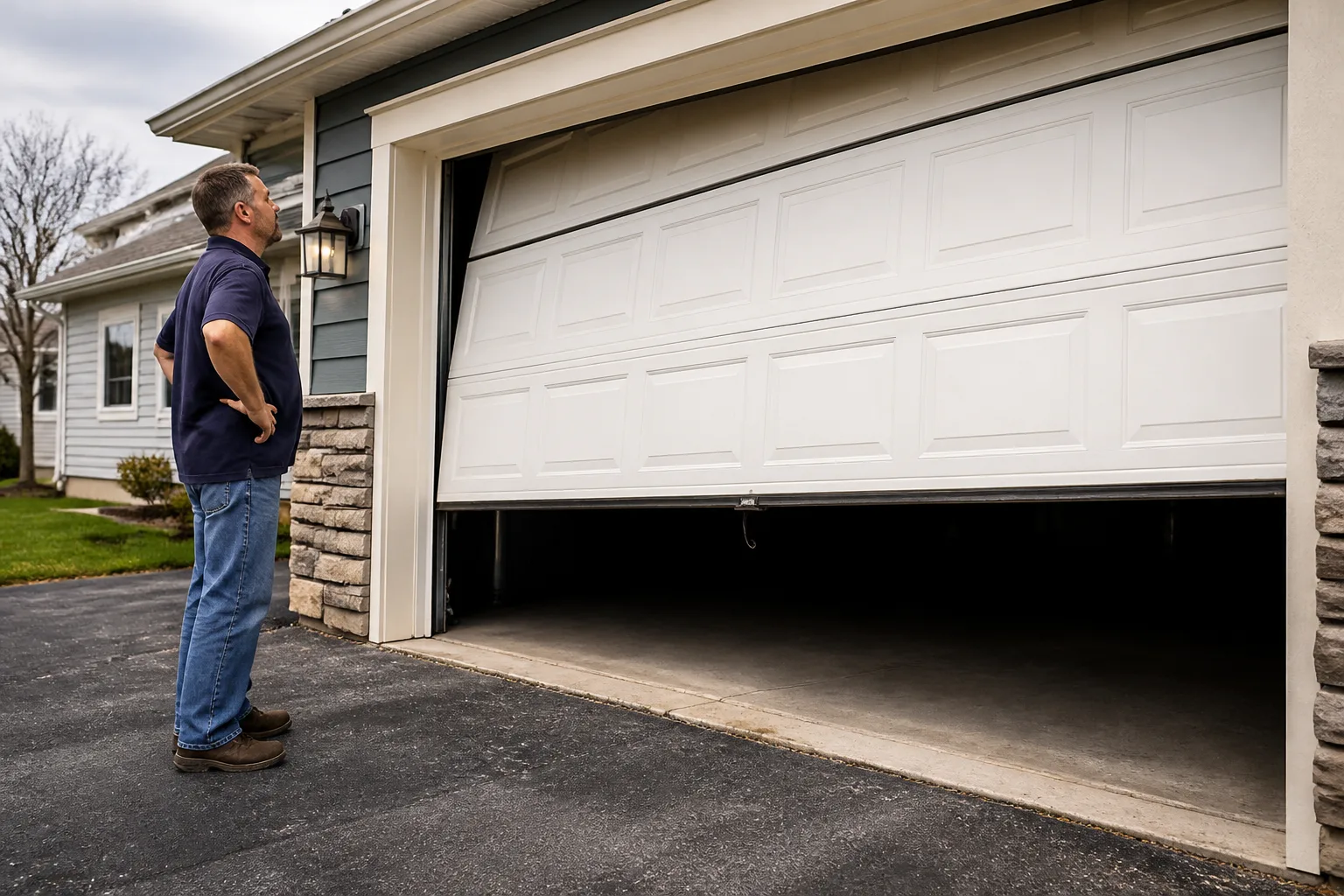
A door that rises crooked, with one side ahead of the other, is telling you something is off balance. On a sectional door, the two sides share the load through the springs and cables, and when one loses tension or a cable stretches, the door drifts. Uneven travel is one of the first signs we look for, and it’s easy to spot from the driveway. Watch the gap between the door and the jambs as it opens. If the gap widens on one side, stop using the opener and get it checked. The longer a door runs out of level, the more strain it puts on the rollers on the low side, and that wear spreads to the track. In Blaine’s cold months, a door that travels unevenly is more likely to bind, because the metal contracts and clearances tighten. Catch it early and it’s usually a roller-and-adjustment job; catch it late and you’re looking at track replacement too.
Warning Sign 2: New Noises – and Why the *Type* of Noise Matters
Volume alone doesn’t tell you much. A door that has always rumbled is probably fine. A door that suddenly squeaks, squeals, or grinds is telling you something changed, and the *kind* of noise points at the cause. Use this as a rough guide: a high-pitched squeak or squeal usually means a dry roller or hinge. A metallic grinding or scraping sound points to metal-on-metal contact, often a worn bearing or a roller that has seized and is dragging in the track. A snapping or popping sound on opening is the one to take seriously; that’s often a cable jumping a drum or a spring about to let go. Popping means stop operating the door. This is where a brand-fluent technician earns their keep. A Clopay or Amarr door and a Wayne Dalton system can make similar sounds for different reasons, and knowing the hardware narrows the diagnosis fast. We’ve heard enough garage doors to tell a squeaky roller from a failing bearing over the phone, but the only way to be sure is to look.
Warning Sign 3: The Door Is Slow to Respond
When the opener hesitates before moving – a pause, a jolt, then motion – the motor is working against resistance it shouldn’t be feeling. That resistance usually comes from one of two places: a spring that has lost tension and isn’t carrying its share of the door’s weight, or a roller or hinge that’s binding. The opener then has to muscle the door up on its own, and openers aren’t built for that. A Genie or LiftMaster unit that used to lift quietly and now labors is a symptom, not the root cause. Replacing the opener without fixing the resistance just means the new one inherits the same problem. A slow response is also the most normalized sign on this list – people adjust their expectations instead of picking up the phone. Don’t. That lag is the door asking for help before it stops asking and just stops.
Warning Sign 4: Visible Cable Fraying or Sagging
Cables run along the sides of the door and wind onto drums at the top. They’re under constant tension, and they’re a visual inspection item, not a do-it-yourself one. Look at the cables from a safe distance, without touching them. What you don’t want to see: frayed strands sticking out, a cable that looks slack or has come off its drum, or kinks in the wire. Any of those means the cable is compromised. Keep fingers and tools well clear. Cables and springs are under load and can release suddenly and violently. This is one of those jobs where the right move is to leave it alone and call. If you see fraying in Blaine, park the car outside and leave the door closed until someone qualified takes a look.
Warning Sign 5: The Door Doesn’t Sit Flush at the Bottom
Stand in the garage with the door closed and look at the gap under the bottom section. A door that doesn’t meet the floor evenly lets in daylight, cold air, and – depending on your setup – pests and water. That gap usually points to one of three things: worn weatherstripping that has flattened and needs replacing, a door that’s out of level, or hinges and rollers that have worn enough to drop the door slightly. A flush fit matters more in Blaine than in milder climates, because a gap at the bottom is a direct line for winter air and a place for snowmelt to work its way in. New weatherstripping is an inexpensive fix. A door that’s out of level because of spring or track problems is the bigger job, and it’s worth knowing which one you’re facing before you buy anything.
Warning Sign 6: Your Remote Works Only Up Close
A remote that used to open the door from the end of the driveway and now only works from ten feet is a sign something in the opener’s radio or wiring has drifted. Sometimes it’s a dying remote battery. Sometimes it’s interference. Often it’s an aging opener nearing the end of its useful life, especially on older legacy platforms. On a smart opener, a range problem can also trace to the antenna or a control board issue. Before you replace the remote, swap the battery and test from a normal distance. If it still won’t reach, the opener is the place to look.
Warning Sign 7: The Opener Runs but the Door Doesn’t Move
You hit the button, you hear the motor, nothing happens. The opener is fine; the connection between it and the door isn’t. That connection runs through the springs, cables, and the arm that attaches the opener to the door. Somewhere in that chain, something has broken – a snapped spring, a cable off its drum, or a stripped gear inside the opener itself. Don’t keep pressing the button hoping it catches. An opener that keeps driving against a door that can’t move will burn itself out or, worse, snap a weakened cable. Turn it off at the wall and call it in. This is one of the calls we get most, and it’s an easy one to sort once someone qualified is standing in front of it.
Warning Sign 8: Manual Operation Feels Heavy
This is the balance test, and it’s worth doing once or twice a year. Pull the release cord to disconnect the opener, then lift the door by hand to about waist height and let go. A balanced door will sit there, more or less where you left it. A door that wants to slam down or feels like you’re lifting a piano is telling you the springs aren’t carrying the weight anymore. That heaviness is the clearest sign a spring is failing, and springs are the most dangerous component in the system. Don’t test them any harder than that. If the door feels heavy or slams, reconnect nothing and leave it closed. Get it checked. Springs are a job for proper tools and training – not something to tackle with a ladder and a prayer.
The Three-Minute Visual Checklist
You don’t need any tools for this. Walk around the door with the opener off and the door closed, then again with it open, and check four things:
- Springs: Look for visible gaps in the coil. A broken spring usually shows a clear separation in the windings.
- Cables: Check both sides for fraying, slack, or a cable off its drum. Look, don’t touch.
- Rollers: Worn rollers look flattened or cracked, and a seized one won’t turn. Check the ones you can see.
- Weatherstripping: A flattened, cracked, or missing bottom seal is a cheap fix now and a bigger one later.
Three minutes, once a season, catches most of what’s on this list before it becomes a breakdown. If something looks off, that’s your cue to call.
Why Warning Signs Compound
These problems don’t stay isolated. A worn roller starts dragging in the track. That drag pulls the door slightly off level. The off-level door puts uneven load on one cable. The cable wears faster than it should. By the time you notice the noise, you’re not fixing one part – you’re fixing three. That’s the pattern that turns a small repair bill into a large one. Catching a worn roller early is a quick fix. Catching it after it has chewed up a track section, misaligned a cable, and thrown the door out of balance is a different job entirely. The same logic applies to a spring that’s lost tension: fix it while the door still opens, and you avoid the opener laboring, the cable strain, and the eventual breakdown. Early service costs a fraction of deferred repair, and in a place with the seasonal temperature swings Blaine gets, the hardware doesn’t get a break.
When to Call a Pro
Battery swaps, weatherstripping, and a visual once-over are homeowner territory. Springs, cables, and anything under tension are not. If you see a broken spring, a frayed cable, a door off its track, or an opener that runs while the door sits still, stop using the door and call. We answer 24/7, with fast dispatch from 7am to 7pm, Sunday through Friday, so you’re not stuck with a dead door through a cold night. Our technicians have up to 12 years of experience, and we work on the brand you already have. That matters, because a LiftMaster, a Genie, a Clopay, and an Amarr door each have their own quirks, and guessing wastes your time.
Related services in Blaine: garage door repair, garage door spring repair, and garage door opener repair. One call covers the door and the opener, so you’re not juggling two numbers while your car sits in the driveway.
Key Takeaways
- Uneven travel, new grinding, slow response, and a door that doesn’t sit flush are early warnings, not normal wear.
- The balance test – disconnect the opener, lift to waist height, release – is the clearest check for a failing spring.
- Noise *type* matters: a new grinding or squeal points at a specific part, while a snapping sound means stop using the door.
- Worn parts compound. Fix a worn roller early and you avoid the track damage and cable wear that follow.
- Cables and springs are dangerous. Look, don’t touch, and call a trained technician for anything under tension.
The Bottom Line
Garage door problems almost never start with a dramatic failure – they start with small changes most people learn to live with. Uneven travel, a new grind, a heavier lift, a remote that quit reaching: each one is the system telling you it needs attention. Catch them early and you’re looking at a straightforward repair. Ignore them and the compounding pattern turns it into a bigger job. If you’re in Blaine and need help, Blaine Garage Door Repair Pros offers free estimates. Call (877) 302-7764. We answer 24/7, with fast dispatch from 7am to 7pm, Sunday through Friday, and the price is quoted and agreed before any work starts. No guesswork, no surprise invoice. From a single spring repair to a full new door and opener system, one call at Blaine Garage Door Repair Pros covers it.
Frequently Asked Questions
Repair is almost always the right call when one part has failed and the door structure is sound. Replacement makes sense when the door is badly out of balance, the panels are damaged beyond what a repair solves, or the system has repeated failures across multiple parts. For an older door where everything is wearing at once, a new door and opener can cost less than chasing repairs. A free estimate will tell you which side of that line you’re on.
It’s a check, not a repair, and it’s safe if you do it right. Disconnect the opener with the release cord, lift the door by hand to about waist height, and let go. A balanced door stays put. A door that slams down or feels heavy means the springs aren’t carrying the load. Stop there. Don’t try to adjust or replace springs yourself. They’re under heavy tension and can cause serious injury. If the door feels heavy, close it and call (877) 302-7764.
It matters a lot. A door that’s always been loud is probably fine. A door that develops a new grinding, squeal, or snapping sound is telling you a part has changed condition. The kind of noise points at the cause: squeaks are usually rollers, grinding usually means metal-on-metal wear, and a snapping or popping sound on opening can mean a cable or spring is about to fail. That last one is a stop-using-the-door signal.
No. Springs are the most dangerous component in the system, under enough tension to cause serious injury if one lets go unexpectedly. They require the right tools, the right technique, and proper training. A door that won’t open because of a broken spring should stay closed until a technician handles it. Call (877) 302-7764 for a free estimate – this is a front-line specialty for us, and it’s a job worth doing right.
Written by the team at Blaine Garage Door Repair Pros.
Need Garage Door Help?
Call Blaine Garage Door Repair Pros - the local pro we connect you with is licensed and insured, here with fast help in Blaine.
(877) 302-7764