
Last updated November 21, 2026
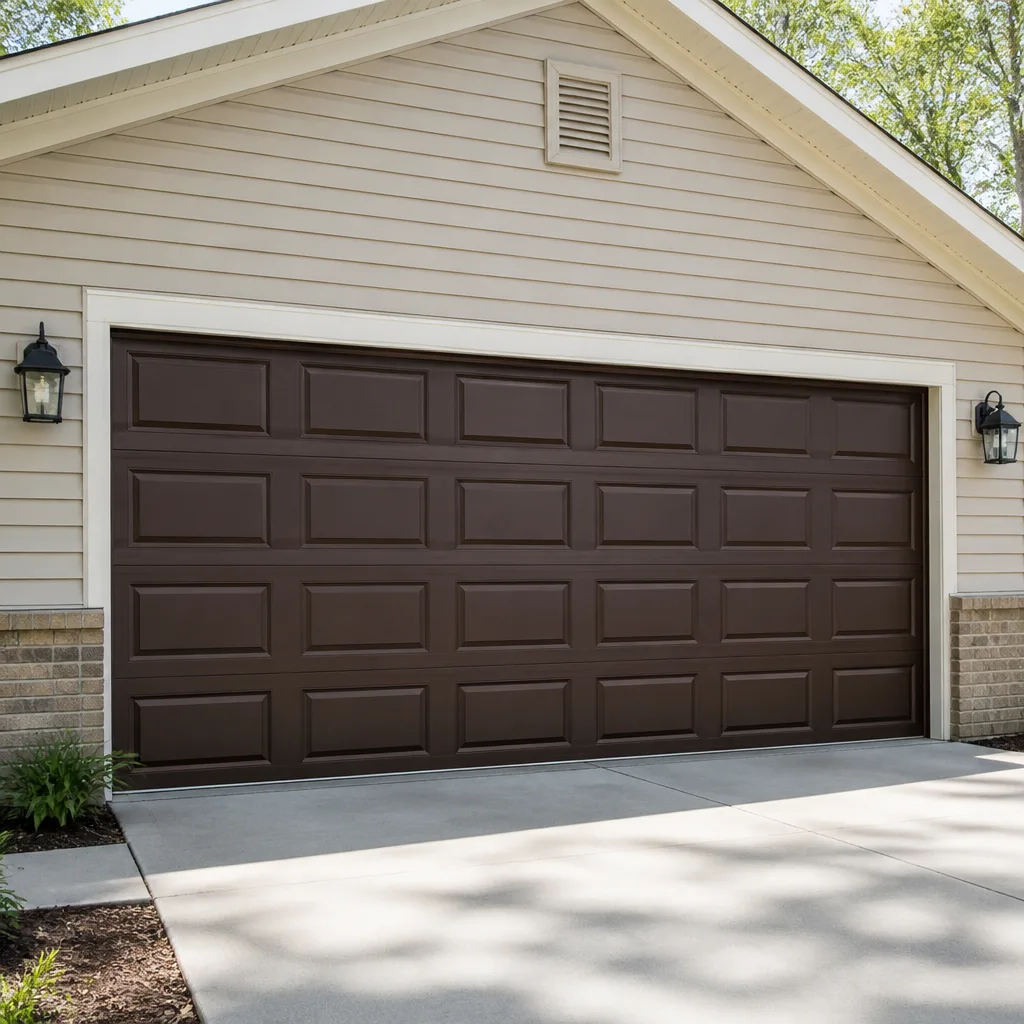 Raised-panel steel
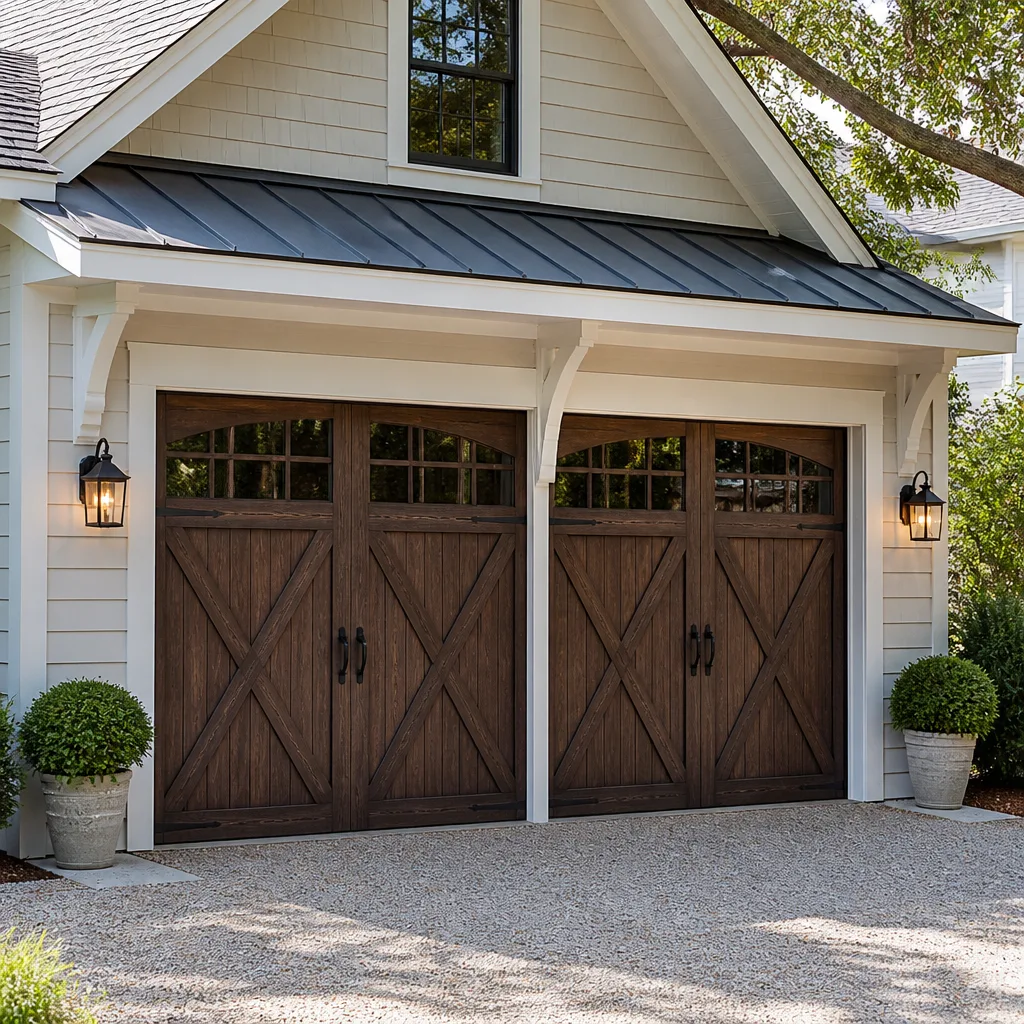 Carriage house
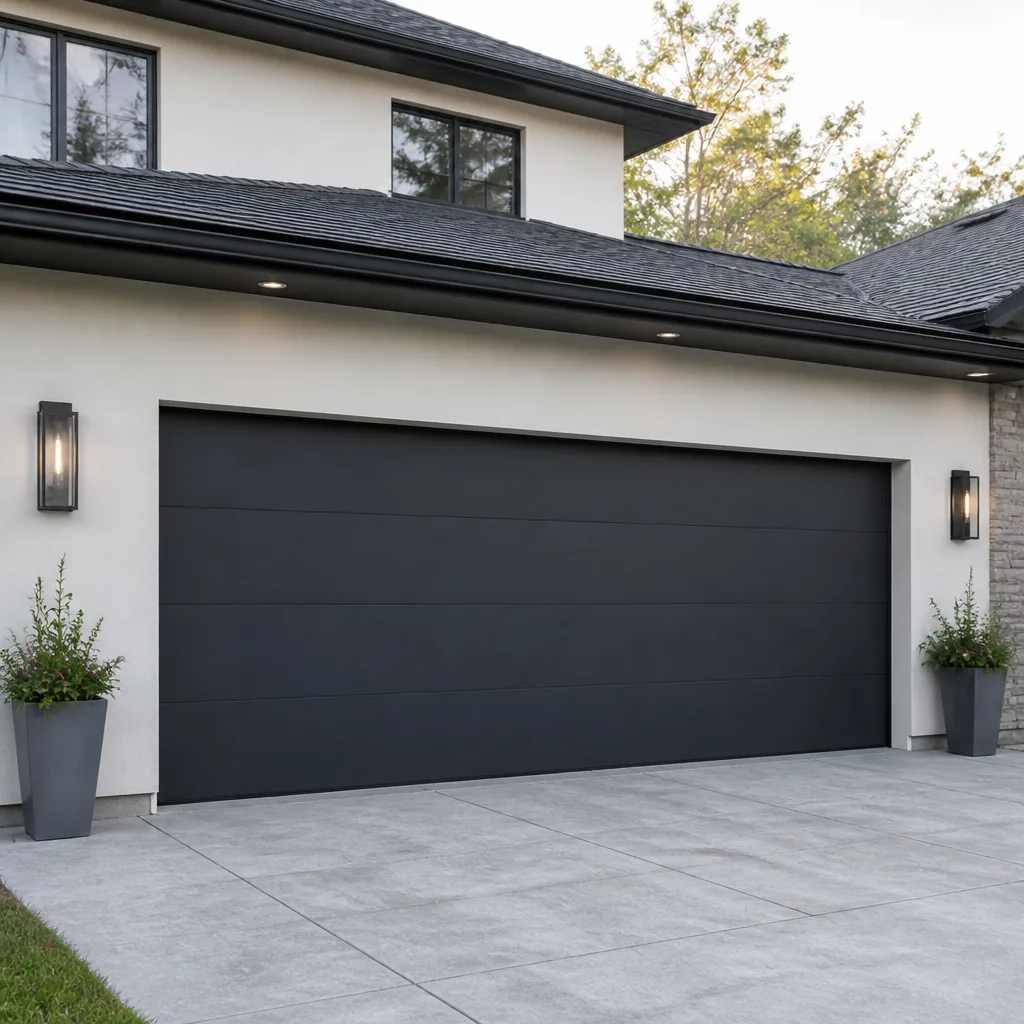 Modern flush
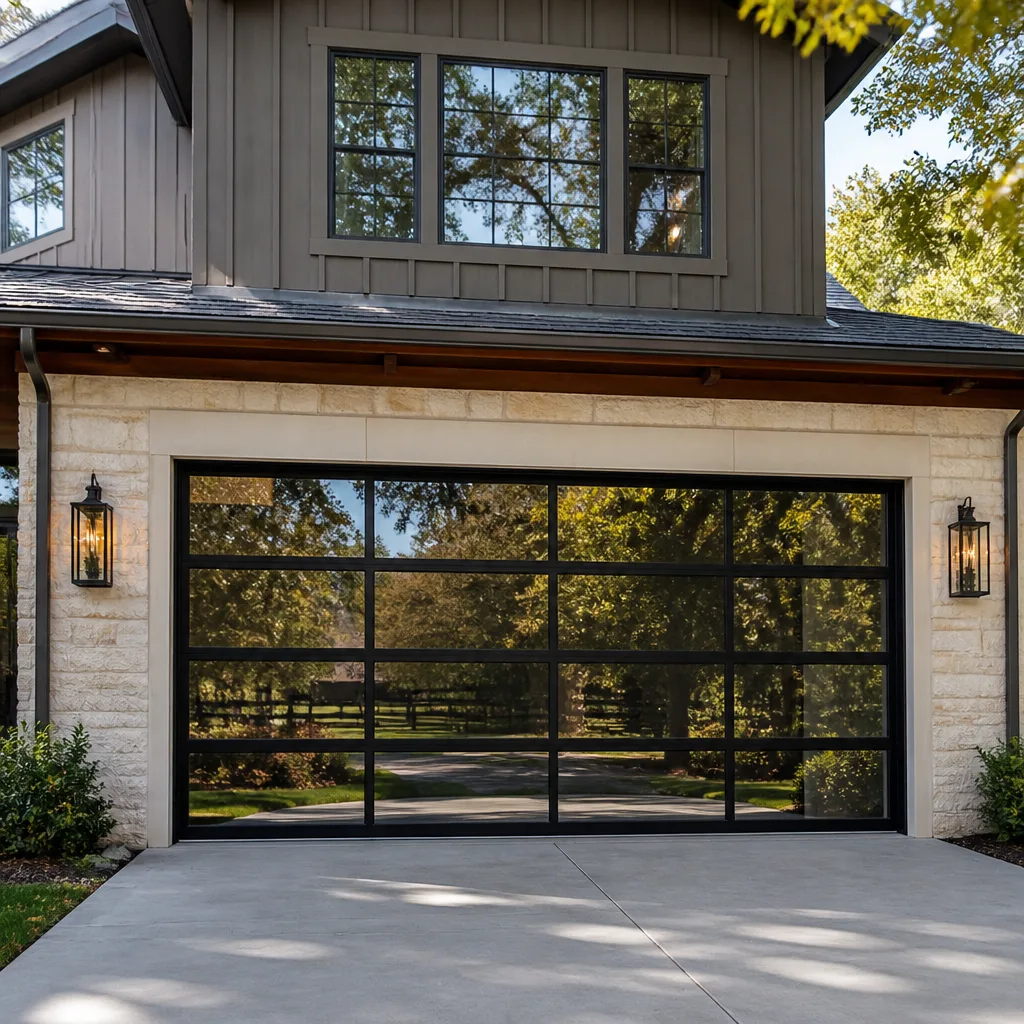 Full-view glass
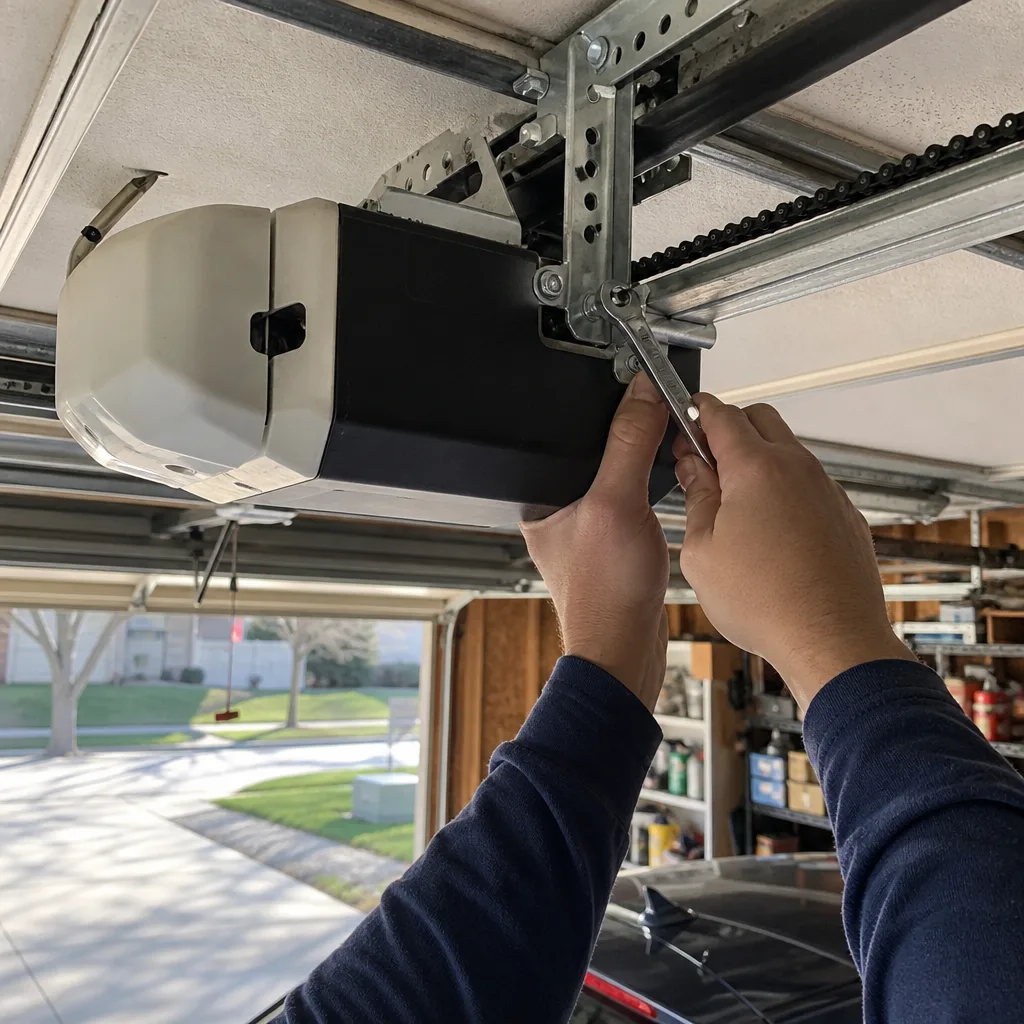
 LiftMaster openers
 Chamberlain openers
Full 25-point door and opener safety check with every visit - springs, cables, rollers, tracks, and your LiftMaster or Chamberlain opener included
You get a price before we start. It does not change when the pro arrives.
Get your free estimateGarage Door Emergency Preparedness Guide for Blaine Homes
The most dangerous moment in a garage door emergency usually isn’t the failure itself. It’s the two seconds after, when a homeowner reaches up and pulls the red manual release cord on a door with a broken spring. That single decision turns a containable repair into a door that slams down under its own weight, and it’s the one thing most people get wrong. In this guide we’ll walk through the three emergencies we’re called to most often in Blaine – a door that won’t open in deep cold, a door that won’t close after an impact, and a cable that snaps mid-cycle – and the exact steps that resolve each one without making it worse. We’ll also cover the prep that takes five minutes and pays off the day something breaks.
Quick Answer
A garage door emergency is handled safest by first leaving the door where it sits, keeping people and vehicles clear, and never pulling the manual release cord if you suspect a broken spring or snapped cable. Secure the opening if the door won’t close, then call for service. Garage door emergencies in Blaine come in three main forms – mechanical failure (springs and cables), weather lockout from cold and snow, and security breach where the door won’t close – and each has its own correct response.
Styles & brands we work with
- Raised-panel steel
- Carriage house
- Modern flush
- Full-view glass
- LiftMaster openers
- Chamberlain openers
Table of Contents
- The Manual Release Protocol: When to Pull, When Not To
- Cold-Weather Lockout: When the Door Won’t Move in the Cold
- Security Breach: Securing a Door That Won’t Close
- When a Cable Snaps Mid-Operation
- Pre-Emergency Prep Every Blaine Homeowner Should Do
- What Happens When You Call
- Common Mistakes to Avoid
- Frequently Asked Questions
The Manual Release Protocol: When to Pull, When Not To
The manual release cord is the most misunderstood piece of hardware on your entire door. It’s designed to let you disengage the opener so you can lift the door by hand – but only when the door’s springs and cables are intact and carrying their normal load. Get that wrong and you can drop a door on whatever is underneath it. Here’s how to think about it before you touch anything.
Every modern opener has a release cord or a release handle hanging from the trolley that travels along the rail. When you pull it, the carriage disconnects from the belt or chain. That’s it. It doesn’t disable the springs, and it doesn’t add any safety. If a torsion spring above the door has snapped, or a torsion cable has let go, the door is holding its full weight on whatever hardware is left. Pulling the release in that state means the door is coming down fast and hard.
Pull the cord only when all of these are true:
- The door is fully closed and settled against the floor
- You can see the springs clearly and none of them are broken, kinked or hanging loose
- No cable is off its drum, tangled, or lying slack against the track
- The opener has power but isn’t responding, and the door itself feels balanced when you gently test it
Never pull the cord when any of these are true:
- You heard a loud bang from the garage and the door won’t lift
- A spring above the door is clearly broken or bowed
- A cable is hanging slack or is wrapped wrong on its drum
- The door is partway open and looks crooked or off its track
- The door is up and there’s a gap you’d be pulling it across
If any of the “never” items apply, the door stays exactly where it sits. Keep vehicles and people out from under it, close the garage entrance to the house, and call for garage door spring repair. Our technicians have up to 12 years of experience handling torsion springs safely, and this is exactly the call where that matters.
Cold-Weather Lockout: When the Door Won’t Move in the Cold
Blaine winters put a specific kind of stress on garage doors. Extreme cold shrinks the metal, thickens the grease in the opener’s gearbox, and freezes the bottom seal to the concrete threshold. A door that worked perfectly in October can stop in January for reasons that have nothing to do with a broken spring. The trick is diagnosing in the right order so you don’t burn out the opener while chasing the wrong problem.
The motor is the part that fails permanently if you push it too hard. Every time the opener tries to move a door that’s frozen or jammed, it’s drawing full current and relying on its internal limits to cut out. Some openers, including many LiftMaster and Chamberlain models, will flash error codes or reverse immediately when they feel resistance. Others will just keep trying until a gear or capacitor gives up. The order below protects the motor.
Cold lockout: step by step
- Watch the opener, not the door. Hit the wall button and step back. If the opener runs and the door doesn’t move, the problem is between the trolley and the door. If the opener is silent, the problem is power, limits, or the opener itself.
- Check the safety sensors. The two small photo-eye sensors near the floor at the door’s edges have to see each other. Snow, ice, or a bumped sensor stops the door from closing at all. Wipe them clean and make sure the small LED on each is solid, not blinking.
- Look at the bottom seal. If the rubber weather seal is frozen to the concrete, the door can’t lift. Break the bond gently with a plastic scraper and warm water – never pry at the panel or bang on the door.
- Test the opener’s force limits – carefully. If the opener runs but strains, stop there. Don’t increase the force setting to push through resistance. That’s the fastest way to strip a gear or crack a panel.
- Read the opener’s diagnostic lights. Most modern units, including Genie and Chamberlain models, flash a code pattern on the back that tells you what failed. Note it down; it saves time when you call.
If none of the simple checks solve it, the door is likely fighting cold-related hardware issues – a stiff torsion spring, a dry hinge, a bound roller – and it needs a trained eye. That’s the point to call for garage door opener repair rather than keep cycling the motor. A door that fights the opener every morning is a door that’s going to keep getting worse until something fails.
Security Breach: Securing a Door That Won’t Close
A door that won’t close leaves the garage open to the street, and for many Blaine homes the garage is the main entry, with tools, bikes and a door into the house. That’s a security problem first and a repair problem second. Before you think about fixing anything, get the opening secured.
Securing a door that won’t close
- Look at where the door is stuck. If it’s fully up, it may simply have a sensor problem or a misaligned track. If it’s partway down and jammed, don’t force it further.
- Try the manual close. With the opener disengaged only if the door is safe to handle (see the release protocol above), lower the door by hand and see if it seats. If it does, you may just have an opener or sensor issue to fix.
- If the door seats but won’t stay down, lock it mechanically. Most overhead doors have a manual slide lock or a locking handle at the center of the bottom panel – many Clopay and Amarr models do. Slide it closed. If there’s no lock, an adjustable clamp, a pair of locking pliers on the track above a roller, or a sturdy bar wedged through the track above the door will hold it down.
- If the door won’t seat at all, get a vehicle or heavy object in front of the opening. Park a car nose-in to the opening, or move a heavy bin against it. It’s not a lock, but it buys time.
- Call for service and lock the house door. The interior door between the garage and house should be locked until the overhead door is fixed.
Locking methods by door type
- Sectional overhead door: manual slide lock or locking handle at the center of the bottom panel, plus a clamp on the vertical track above a roller if needed.
- One-piece tilt-up door: a sliding bolt at the side frame or a padlock through the hasp, if fitted.
- Roll-up door (commercial-style): a slide bolt on the inside of the bottom rail or a latch bar across the base.
If the door was forced, or if the track has been bent or the panel is pushed in, don’t try to operate the opener – it will usually make damage worse. That’s a call for garage door repair so the track, hinges and opener can be checked together.
When a Cable Snaps Mid-Operation
A cable snap sounds like a crack or a metallic clang, and the door usually comes down crooked or stops partway. The cable is what holds the door’s tension on each side, working with the torsion spring. Once it snaps, the door is unloaded on one side and can bind or drop. That position is where you need to stay.
What matters is where the door ends up:
- If the door is fully closed and stuck: leave it closed. It’s heavy on one side, but it’s down and it’s not going to fall further. Keep people out from under it and call.
- If the door is fully up and stuck: leave it up. Don’t try to close it by hand. The door is holding on lifts or a partial spring load on one side; manually pulling it down risks losing control of a very heavy slab.
- If the door is partway open and crooked: don’t touch it. Don’t try to lift it, don’t try to lower it, don’t cycle the opener. Get everyone clear and call.
The reason we say this so bluntly is that a sectional door weighs roughly 100 to 250 pounds depending on width and insulation, and once it’s off-balance on one side, it’s not a two-person job to catch it. This is one of the emergencies in the guide where the correct response is honestly almost no response – hold the position and call.
Getting in and out of the garage when the door is stuck
- Use the interior door from the house if you have one.
- If the only entry is the overhead door, use the side or rear service door most garages have.
- If there is no other door and the overhead door is jammed partway, call for emergency service rather than try to squeeze under or lift the door. We answer 24/7 and can get fast dispatch from 7am to 7pm.
Pre-Emergency Prep Every Blaine Homeowner Should Do
Two minutes of familiarity now saves an hour of panic later. We’ve been called to Blaine homes where the homeowner had never seen the manual release cord before a spring broke, and that’s the exact situation we want to prevent.
1. Find and test your manual release
With the door fully closed, look up at the opener rail. You’ll see a rope or a handle hanging from the trolley. That’s the release. Pull it once while the door is down and safe, gently lift the door a few inches to feel how it moves, then push the door back down and re-engage the trolley by running the opener. Now you know where it is and how it feels. The point isn’t to use it in an emergency – it’s to know when not to. If you did this test and felt anything that seemed heavy or uneven, that’s a sign the door is out of balance and worth a look before something breaks.
2. Know your opener’s backup power situation
Many modern openers – notably models from LiftMaster and Chamberlain – can be fitted with a battery backup unit so the door still opens during a power outage. If yours has one, find out where the battery is and whether it’s still good. Why this matters in Blaine: winter storms and ice take out power here more often than anywhere else in the metro, and an opener without backup means a car stuck inside the garage during an outage. If you don’t have backup power and you rely on the garage as your main entry, ask about it when you next have service done.
3. Know the two safety sensors and their lights
Those two small sensors near the floor at each side of the door track are the reason the door reverses if something’s under it. A solid light on each means they’re paired. A blinking light means the beam is broken or misaligned. If you know this, you’ll never mistake a sensor problem for a mechanical one.
4. Make sure the release cord is reachable but not hanging too low
The handle should sit about six feet off the floor – high enough that a child or a passing bicycle doesn’t catch it, low enough that you can reach it. If yours is hanging too low, tuck it up with the provided clip or a cable tie.
What Happens When You Call
When something breaks, the first thing most homeowners want to know is what happens after the call. Here’s how it works with us. You call (877) 302-7764, we answer 24/7, and we ask a few questions to figure out what’s actually going on: what the door is doing, what you heard, whether a spring is visibly broken, whether the door is stuck up or down. Those answers decide whether it’s a same-day job or needs a scheduled visit.
For mechanical failures – broken springs, snapped cables, dead openers, doors off-track – we schedule emergency service, with fast dispatch from 7am to 7pm. For a door that needs replacement, or a full new opener installation, the work is measured, ordered and scheduled, and we’ll come out for a free measure and a written price. Either way you get a written estimate before any work begins, and that estimate is the price. No surprises added on after the fact.
Our technicians have up to 12 years of experience and work on the brand you already have – Raynor, LiftMaster, Chamberlain, Genie, Clopay, Amarr, Wayne Dalton and Craftsman. If the door and the opener both need attention, one call covers both. Brand compatibility matters in an emergency because on some systems a specific opener or door type has specific release and reset procedures, and we don’t have to guess which one you’re standing in front of.
Common Mistakes to Avoid
- Pulling the manual release with a broken spring. This is the number one way a repairable problem becomes a dangerous one. The spring is what makes the door feel light; if it’s gone, the door is at full weight. If you don’t know the spring is intact, don’t pull.
- Forcing a frozen door with the opener. In a Blaine January, a door frozen to the threshold or a stiff torsion spring can stall the motor. Cycling the opener repeatedly burns out gears and can burn the motor. Once you’ve checked the seal and the sensors, stop and call.
- Increasing the opener’s force setting. The force setting is a safety limit, not a performance dial. Turning it up to push through resistance can crack a panel or strip the opener’s gear.
- Letting a stuck door sit open overnight. A door that won’t close is a security gap. Secure it mechanically or block the opening, then call.
- Trying to close a door that’s snapped a cable. Don’t lower it, don’t lift it, don’t push it. A door on one cable is unloaded on one side and can drop fast.
- Assuming a door that’s slow to open in winter needs a new opener. Cold grease, stiff springs and a frozen seal all act like an opener problem. Diagnose before spending.
- Hiring a generalist for spring work. Springs are the most dangerous component of the system and require proper tools and training. A handyman who’s never done it may decline – or worse, try.
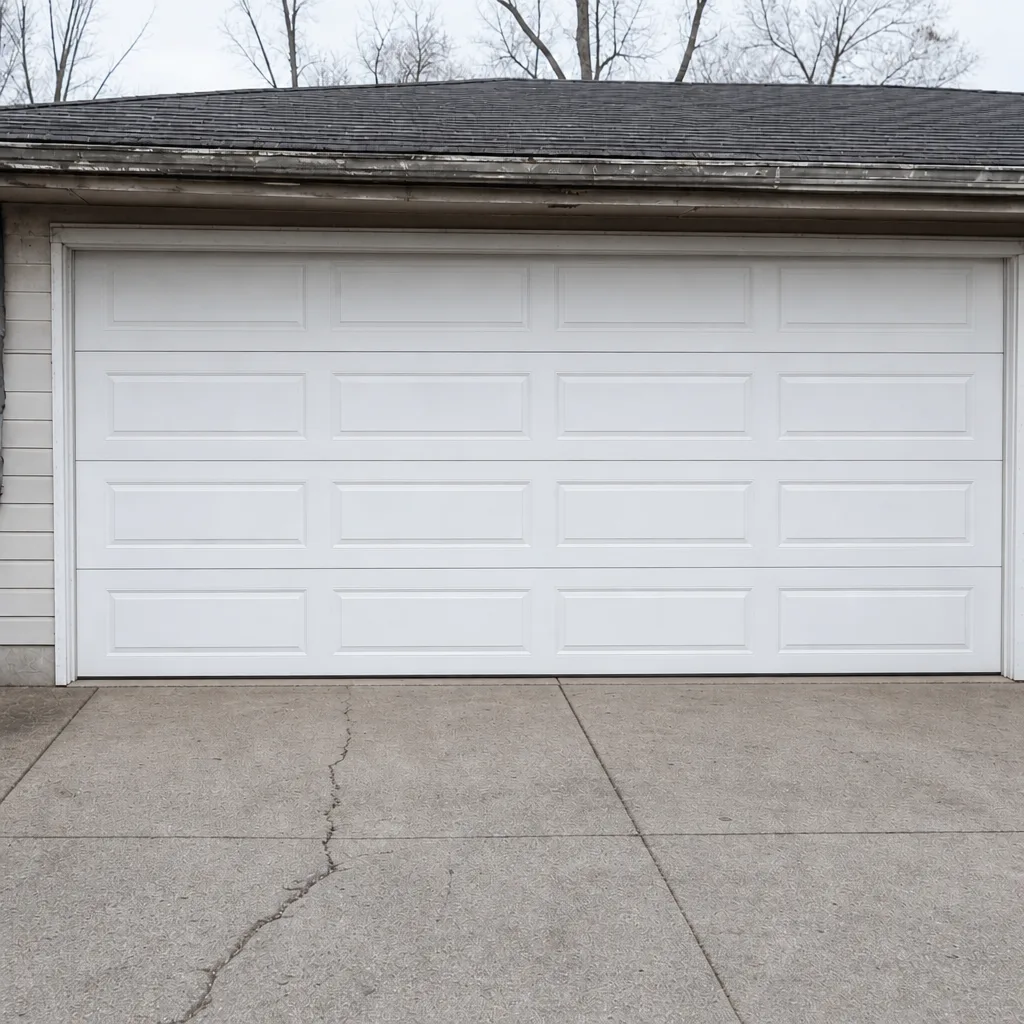
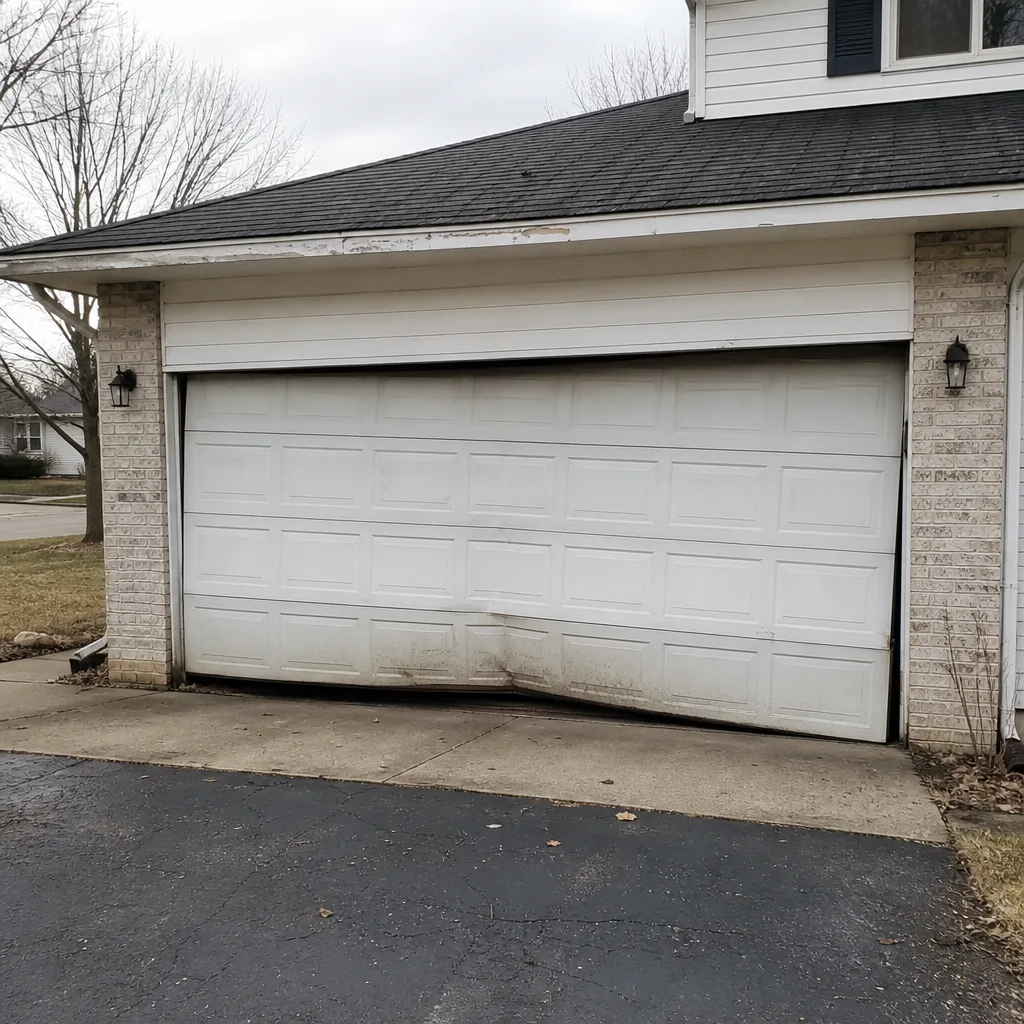
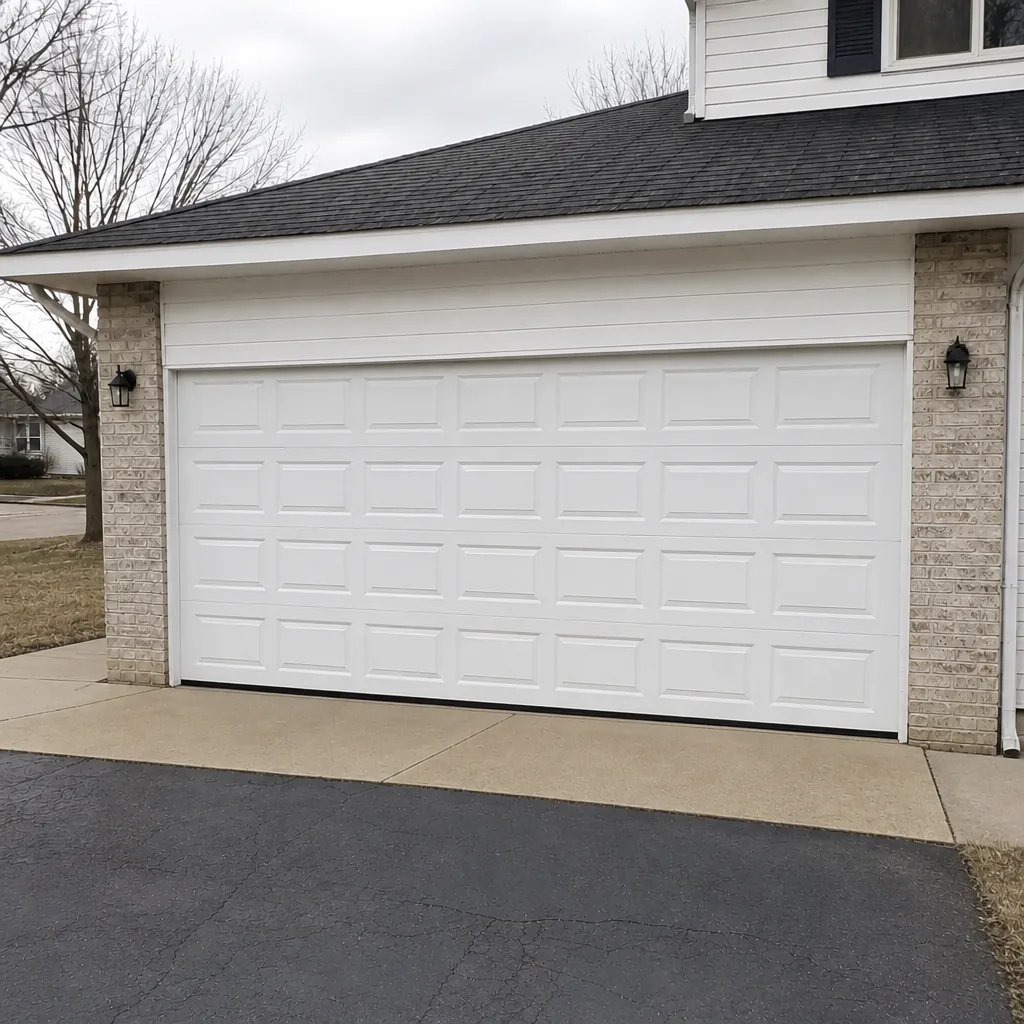
See the difference
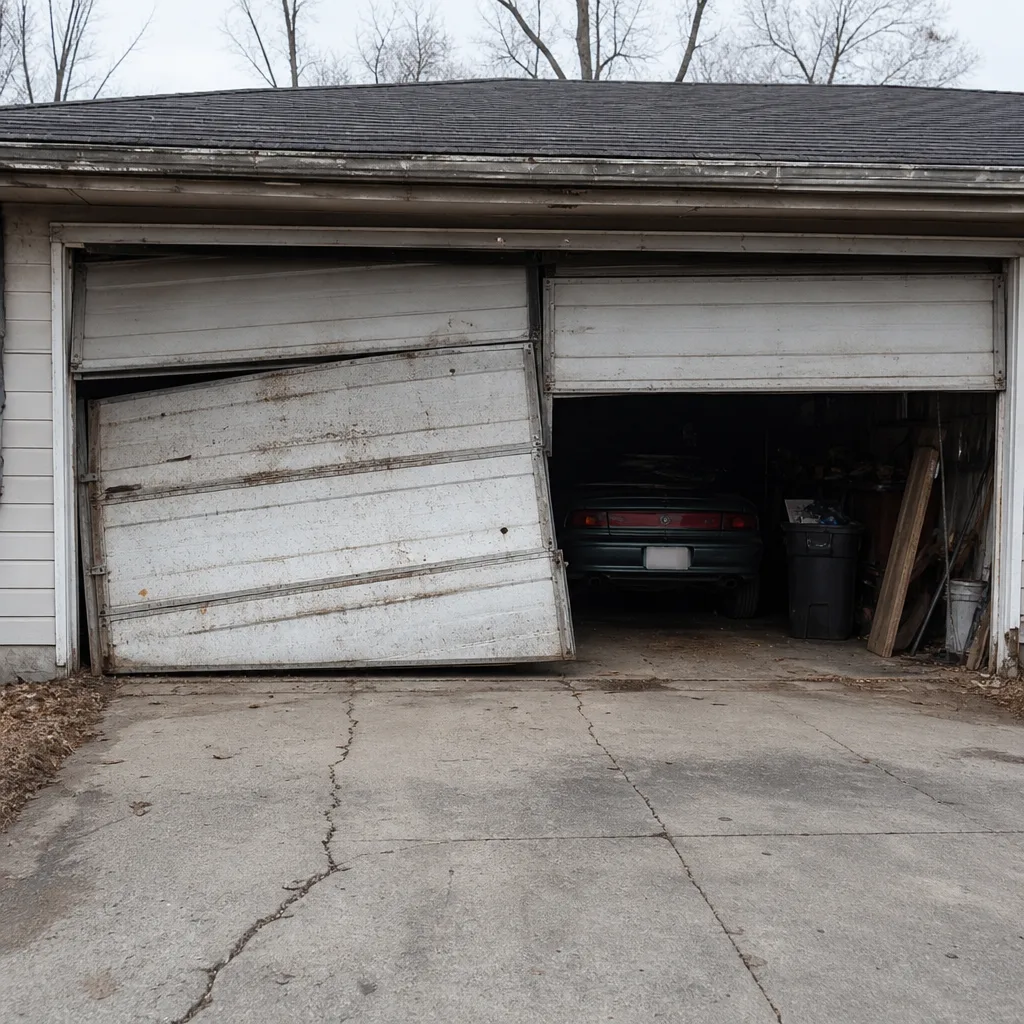 Before
 After
 Before
 After
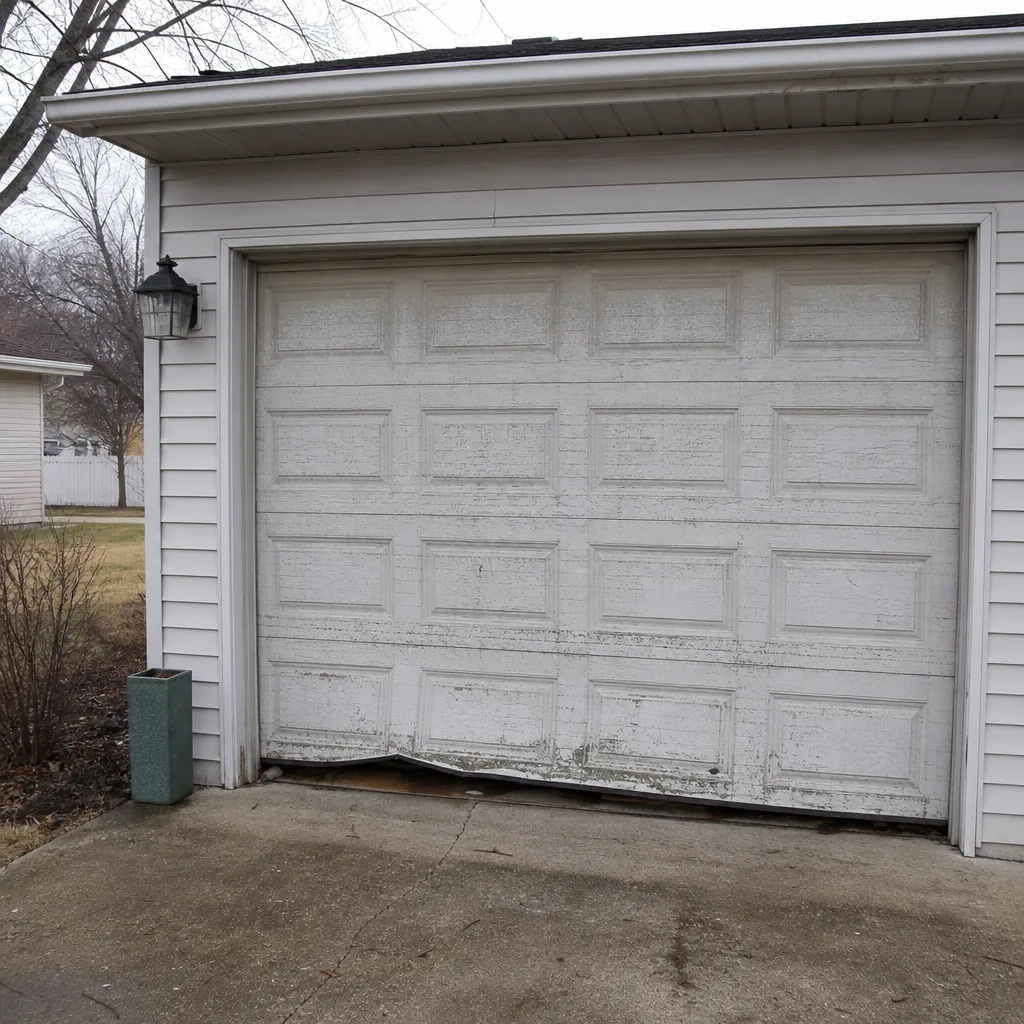 Before
 After
When to Call a Professional
Most of what’s in this guide is about handling things safely in the moment, not fixing them yourself. Call a professional when a spring is broken or bowed, a cable is off or snapped, the door is off-track or crooked, the opener runs but the door doesn’t move, the door won’t stay down, or the door was struck or forced. Spring repair, cable replacement, track realignment and opener diagnosis all involve parts that can seriously injure someone who isn’t trained to handle them. Blaine Garage Door Repair Pros offers free estimates in Blaine – call (877) 302-7764. We answer 24/7. Fast dispatch from 7am to 7pm, Sunday through Friday, and closed Saturday. We work on the brand you already have, and one call covers the door and the opener together.
Frequently Asked Questions
Most emergency garage door repairs in Blaine are priced by the specific job in a written estimate you get before any work starts, which is the price. That said, the common urgent repairs are broken springs, snapped cables and dead openers, and the cost depends on the door type, the hardware and whether one part or both sides failed. Call (877) 302-7764 for a free estimate. We answer 24/7. Fast dispatch from 7am to 7pm, Sunday through Friday.
Yes, for most mechanical failures we can schedule emergency service with fast dispatch from 7am to 7pm. Call (877) 302-7764 and tell us what the door is doing – stuck up, stuck down, or stuck partway – so we know what to bring. We answer 24/7; a call outside dispatch hours is booked into the next opening, Sunday through Friday, 7am to 7pm. For a full new door or a scheduled install, we book a free measure and a written price instead.
No, the written estimate sets the price. We look at the job, quote it, and agree the number with you before any work starts. If we find something beyond what was quoted – a bent track behind a jammed door, for example – we talk to you about it before doing the extra work.
The local professionals we connect you with are licensed and insured as their state requires. Our technicians have up to 12 years of experience with residential garage doors and openers, including spring work, cable replacement and opener diagnosis. Call (877) 302-7764 to schedule.
No, don’t force it. Freezing to the threshold is common in Blaine winters, and forcing a frozen door can damage the bottom panel, the seal, or the opener’s gear. Break the bond gently with warm water and a plastic scraper, check the safety sensors, and if the door still won’t move, call (877) 302-7764. We answer 24/7. Fast dispatch from 7am to 7pm, Sunday through Friday.
Secure the opening first – use the door’s manual slide lock, a clamp above a roller on the track, or a piece of heavy furniture or a vehicle in front of it – then call for service. Call (877) 302-7764 so the track, panels and opener can be assessed. We can work with your insurer on the documentation if needed. We answer 24/7.
The Bottom Line
Most garage door emergencies in Blaine come down to a handful of decisions made in the first sixty seconds. Don’t pull the manual release if the spring or cable is questionable. Don’t force a frozen door or turn up the opener’s force setting. Secure the opening if the door won’t close. Stay clear if a cable has snapped. Know where your release is and what your opener’s backup power looks like before anything happens. Those habits prevent most of the damage we see and keep a bad day from getting worse. When you’re past the point of managing it yourself, call (877) 302-7764 for Blaine Garage Door Repair Pros. We answer 24/7. Fast dispatch from 7am to 7pm, closed Saturday. Free estimates, and the written price is the price.
Written by the team at Blaine Garage Door Repair Pros.