
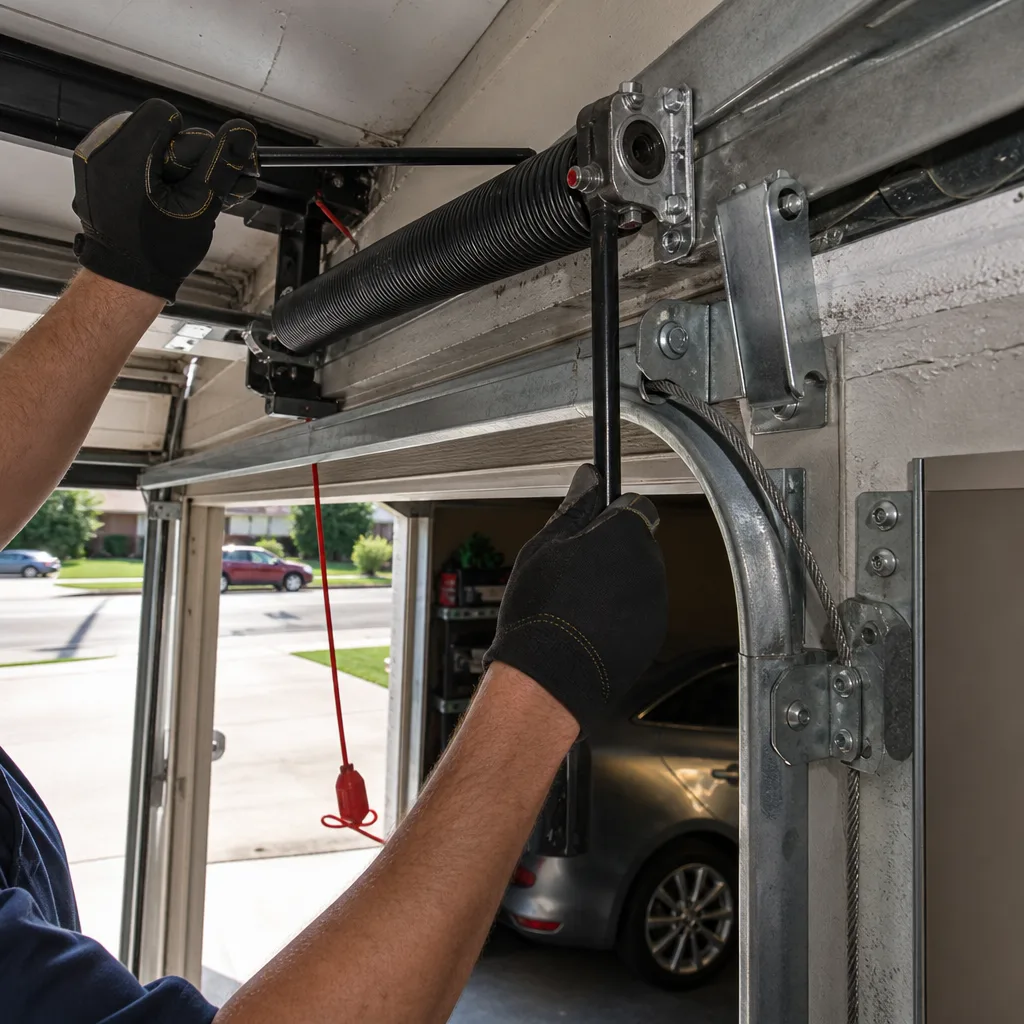
Last updated November 21, 2026
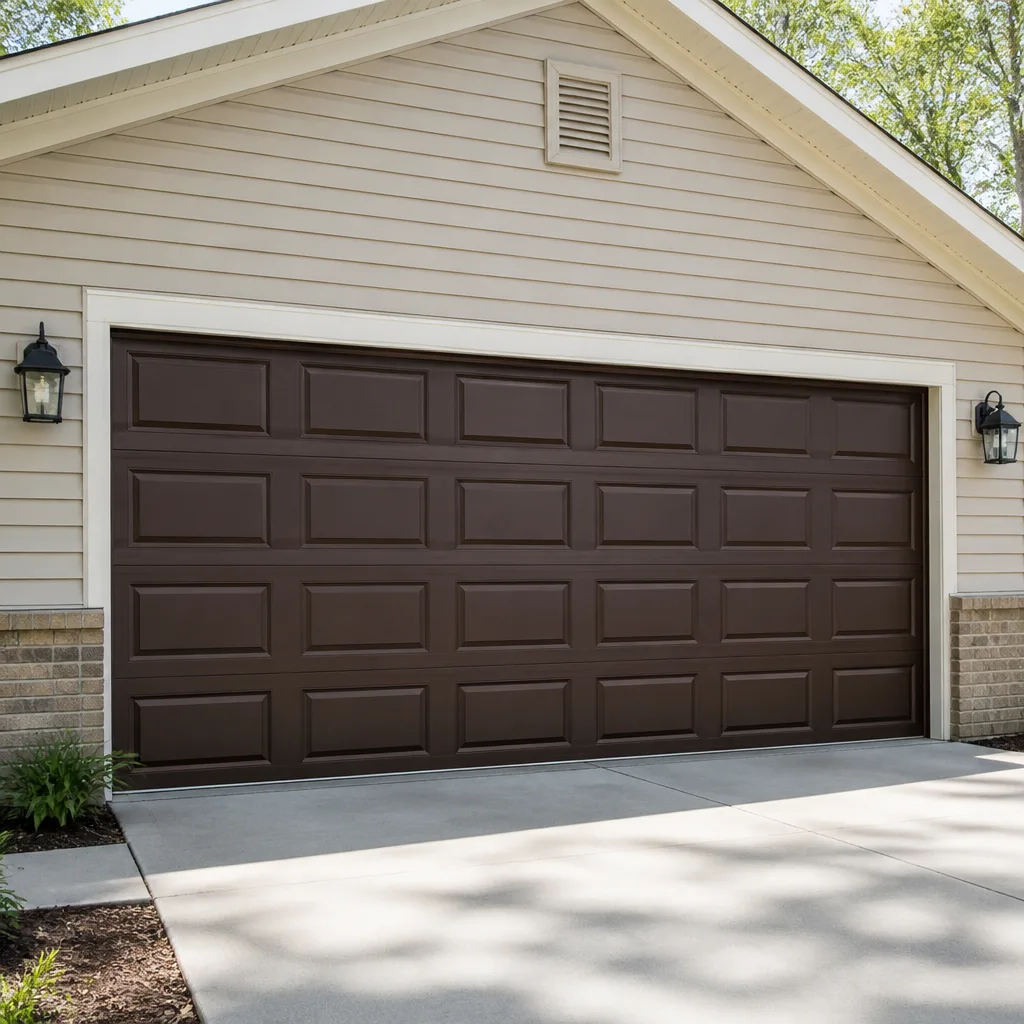 Raised-panel steel
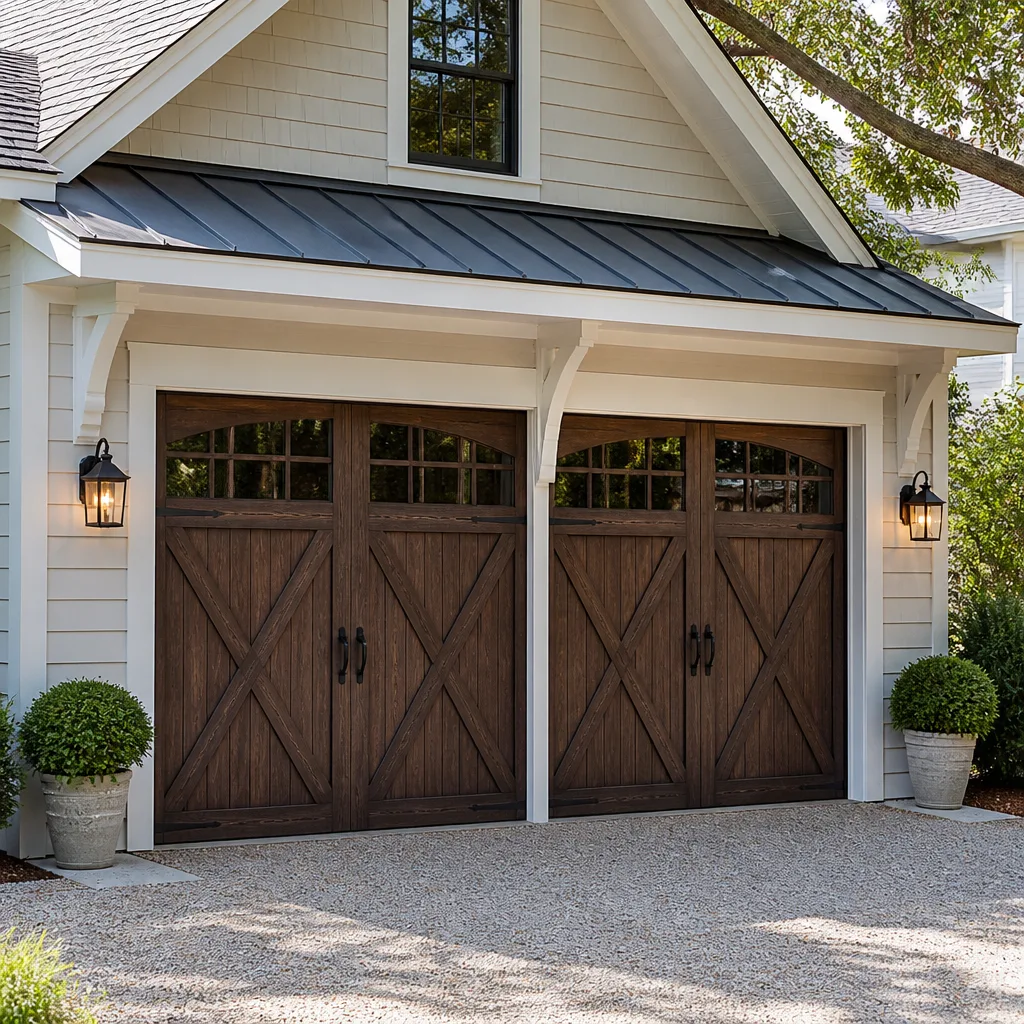 Carriage house
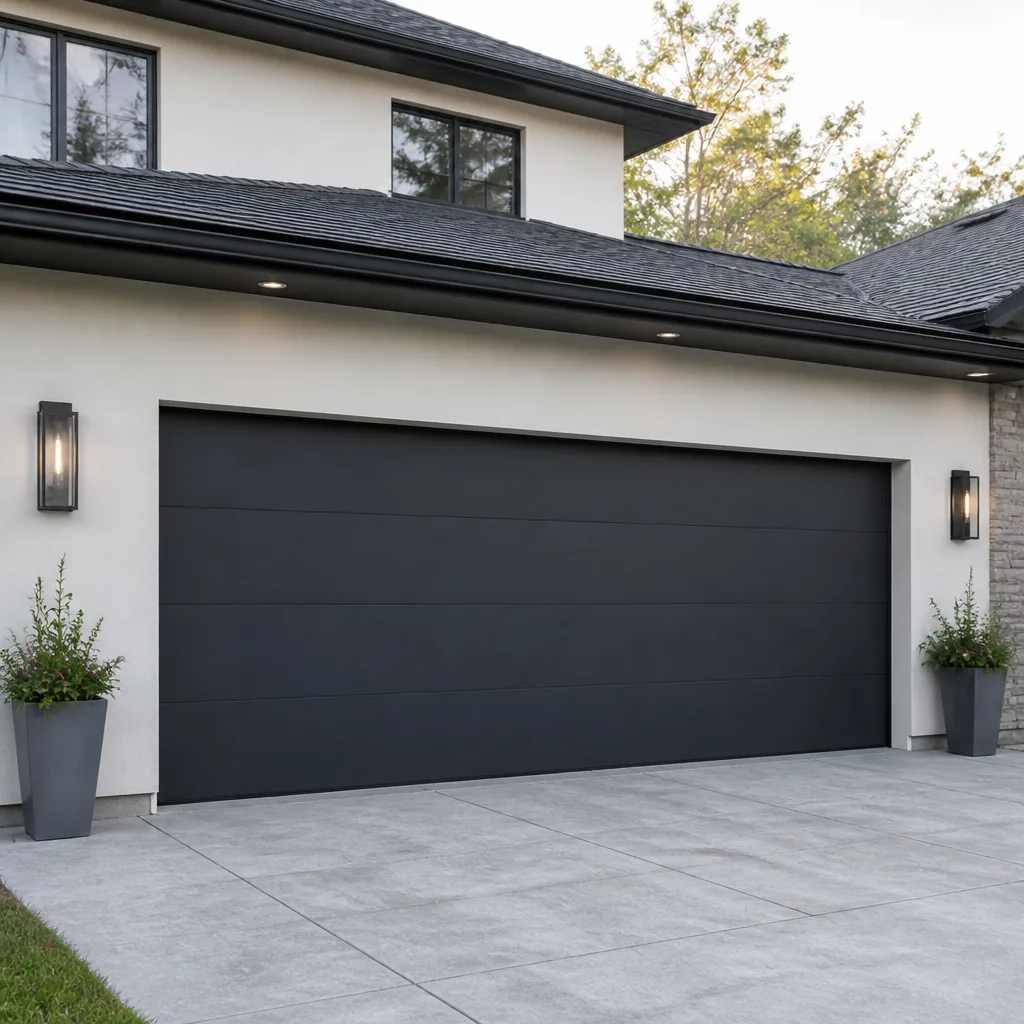 Modern flush
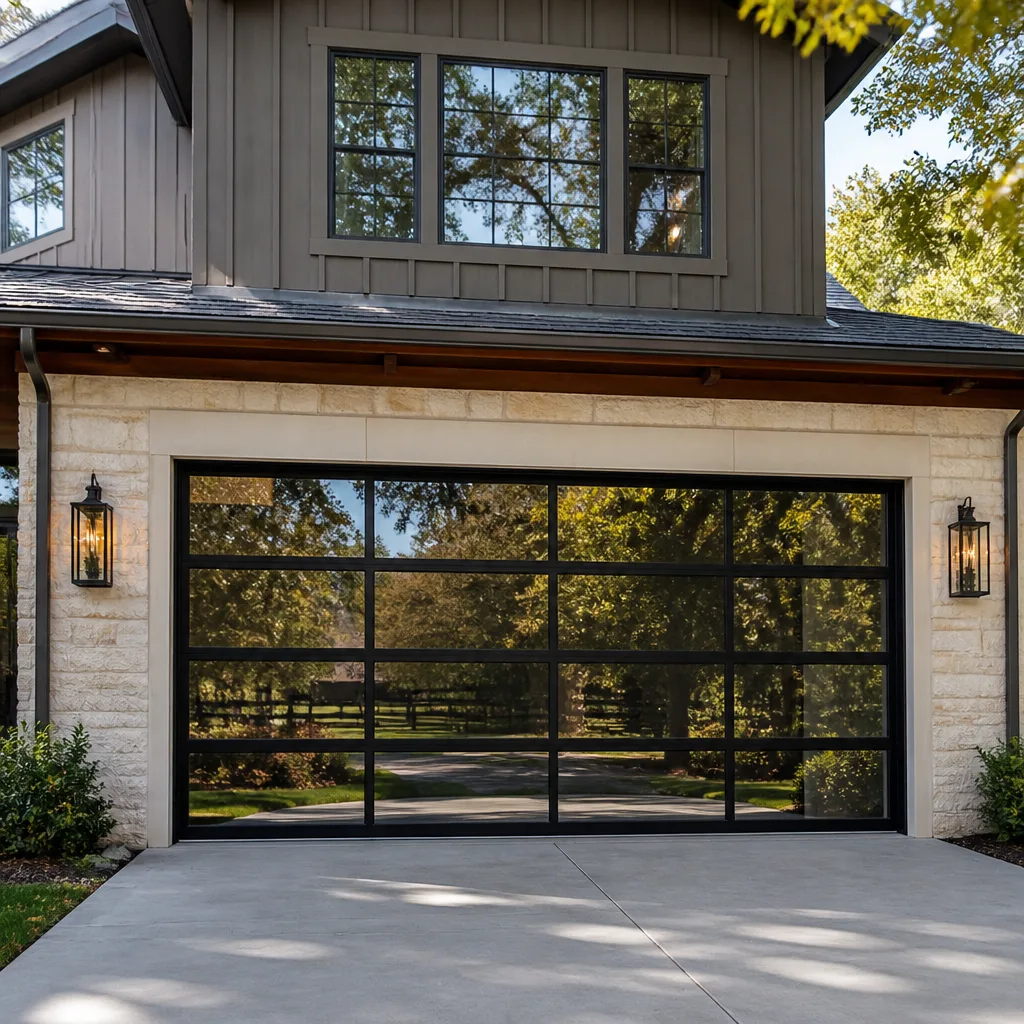 Full-view glass
 LiftMaster openers
 Chamberlain openers
Full 25-point door and opener safety check with every visit - springs, cables, rollers, tracks, and your LiftMaster or Chamberlain opener included
You get a price before we start. It does not change when the pro arrives.
Get your free estimateGarage Door Repair Troubleshooting in Blaine: Common Problems and How to Fix Them
The door that “just stopped working” is almost never a single failure. It’s usually one broken component that quietly took two more with it. A snapped torsion spring lets the cables go slack, the cables jump a drum, and suddenly the door hangs crooked and the opener strains against a load it was never built to lift. Homeowners in Blaine call us convinced the opener is dead when the real trouble is a spring that failed two days earlier. This guide maps symptoms to the four systems that actually fail – springs, cables, tracks, and openers – so you can tell a safe five-minute check from a job that could hurt you. You’ll learn what each sound and movement pattern means, what you can safely inspect, and what belongs in the hands of a trained technician.
Quick Answer
Most garage door problems trace back to one of four systems: springs (the door won’t lift or slams down), cables (the door hangs crooked or won’t move at all), tracks (the door binds, scrapes, or comes off the rails), or openers (the motor runs but the door doesn’t move, or reverses immediately). You can safely check photo-eye alignment, limit switches, and track obstructions yourself. Anything involving torsion springs, cable tension, or the springs under load needs a trained technician – those parts store enough energy to cause serious injury.
Styles & brands we work with
- Raised-panel steel
- Carriage house
- Modern flush
- Full-view glass
- LiftMaster openers
- Chamberlain openers
Table of Contents
- The Symptom-to-System Diagnostic Matrix
- What You Can Safely Check vs. What Requires a Technician
- Spring Failures: The Most Dangerous Component
- How Minnesota’s Freeze-Thaw Cycle Breaks Doors
- Cables and Tracks: Alignment, Binding, and Off-Track Doors
- Why a Door That Reverses Immediately Is Usually a Spring Problem
- Opener Faults Across LiftMaster, Chamberlain, Genie, and Craftsman
- When a “Working” Door Is Still Dangerous
The Symptom-to-System Diagnostic Matrix
Before you touch anything, watch and listen. A garage door tells you which system is failing through three channels: how it moves, what it sounds like, and what the opener does when you press the button. Run the door once from the wall switch and once from the remote. Stand back and watch the whole travel. Most Blaine homeowners can narrow the fault to one system in under five minutes with the matrix below.
- Door won’t lift at all, motor hums, no movement – usually a broken torsion spring. Call a technician.
- Door lifts a foot then stops or reverses – spring tension loss or a misaligned photo-eye. Check the eyes first; if they’re clean and aligned, it’s the spring.
- Door drops fast or slams shut – broken spring or failed cable. Stop using the door.
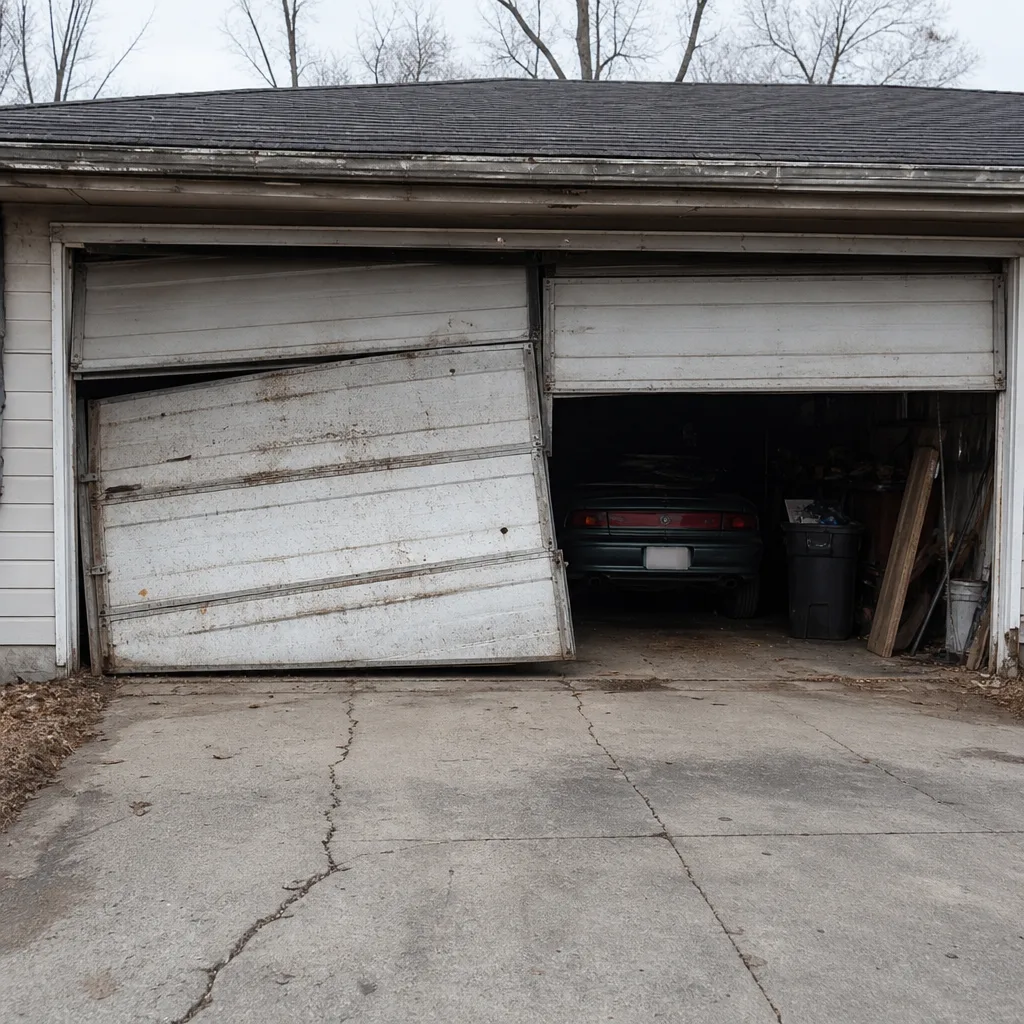
- Door hangs crooked, one side lower – a snapped or jumped cable. Call a technician.
- Loud bang from the garage, door dead afterward – classic torsion spring snap. Don’t run the opener again.
- Grinding or scraping as the door moves – track misalignment or a worn roller.
- Door squeals or squeaks – dry rollers or hinges; often safe to lubricate.
- Opener runs but door stays put – broken spring, snapped cable, or a stripped opener gear.
- Opener clicks and nothing happens – logic board, capacitor, or a dead safety sensor.
That matrix is a triage tool, not a diagnosis. It tells you which system to look at and, just as important, which ones to leave alone. For a full repair when the door is clearly compromised, our garage door repair team handles the diagnosis and the fix in one visit.
What You Can Safely Check vs. What Requires a Technician
There’s a clear line between the checks a homeowner can do and the ones that put people in the emergency room. The difference isn’t difficulty – it’s stored energy. A torsion spring under tension holds a load that can release in a fraction of a second, and a cable under tension carries that same force down the side of the door. No YouTube video changes that physics.
Checks that are safe for homeowners
- Photo-eye alignment: look at the two sensors at the bottom of the tracks. Each has a small light. If one is dark or blinking, wipe the lens and confirm they face each other.
- Track obstructions: look for debris, a stray tool, or a bent track with the door fully closed and the opener unplugged.
- Limit switches on the opener: the small adjustment screws on the opener housing set how far the door travels up and down.
- Lubrication: a light application of garage door lubricant on rollers, hinges, and the opener rail is fine with the door closed.
- Balance test: with the door closed, pull the manual release and lift the door halfway. A healthy door stays put. If it drops or shoots up, the springs are out of balance.
Checks that require a trained technician
- Torsion spring tension, winding, or replacement. Never wind or unwind a torsion spring yourself.
- Cable tension, drums, and anything involving the cables at the sides.
- Replacing a snapped extension spring – the door must be secured before the spring is touched.
- Straightening a bent track or reattaching a door that’s come off the rails.
- Any adjustment where the door’s full weight is supported by the springs or cables.
The photo-eye and limit-switch checks cover a lot of ground. In our experience, a large share of “my door won’t close” calls in Blaine turn out to be a sensor the sun is hitting wrong or a lens with road grime on it. Everything past those, especially spring work, is a call to a professional.
Spring Failures: The Most Dangerous Component
A torsion spring at the top of the door does the hard work of lifting it – the opener only guides it. When a spring fails, the door can become extremely heavy or fall without warning. Blaine’s cold winters make spring failure more common than in milder climates: metal gets stressed by repeated thermal cycling, and a door that sat stiff and heavy all winter is more likely to snap when temperatures swing. That bang from the garage isn’t a car backfiring. It’s a spring letting go.
Signs your springs are failing or have failed:
- A loud bang from the garage, followed by a door that won’t open.
- A visible gap in the torsion spring coil above the door.
- The door feels very heavy when you lift it by hand with the opener released.
- The opener runs but the door stays put or lifts only a few inches.
- Uneven lift – one side comes up before the other.
- A stretched or extended extension spring hanging loose on the side tracks.
Springs have a rated life cycle, and most residential springs are designed to last a set number of open-and-close cycles. A busy Blaine household that uses the garage as the main entry can burn through that cycle count faster than the rating suggests. When a spring breaks, the correct move is to stop using the door. For a spring that’s snapped or clearly fatigued, our garage door spring repair specialists handle the job with proper winding bars and door-securing tools. Springs are the one part of the system we never recommend for a homeowner to touch. We can’t stress this enough – what looks like a simple coil is a loaded spring holding hundreds of pounds of door weight.
How Minnesota’s Freeze-Thaw Cycle Breaks Doors
Blaine sits in a freeze-thaw belt, and garage doors here fail in ways they don’t in warmer parts of the country. The pattern repeats every winter: a warm afternoon melts snow off the car and the driveway, that water runs under the bottom seal and refreezes overnight into a solid block of ice. The door, the seal, and the floor become one unit. When the opener runs the next morning, it either rips the bottom seal loose, strains the opener, or snaps a spring that wasn’t the direct cause of the problem but took the load.
Freeze-thaw failure patterns we see in Blaine
- Bottom seal freeze-down – the rubber seal sticks to the concrete. The opener pulls, the seal tears, and the door may torque sideways on its tracks.
- Metal fatigue in extension springs – older doors on the sides use extension springs, which shorten and expand across temperature swings. Repeated thermal stress shortens their working life.
- Salt and grit on rollers – winter road spray migrates onto the roller bearings and tracks as it dries. Grit packs into the rollers and grinds the metal.
- Frozen cables in the drum – water can freeze inside the cable drum at the top corner, binding the cable and causing it to jump.
- Condensation on the opener logic board – a cold, unheated garage collects moisture, and older openers with aging boards can fault out when conditions shift.
The practical defense is simple: clear snow and ice from the threshold before you run the door in cold weather, and keep the bottom seal and tracks clean of grit. If you park a wet car and a puddle forms under the door, break the ice loose by hand before touching the opener. And when you do call for service, a specialist who knows a Clopay from an Amarr will spot a seal that’s freezing before it tears.
Cables and Tracks: Alignment, Binding, and Off-Track Doors
Cables carry the spring’s force down the sides of the door and winch it up and down the tracks. When a cable snaps or jumps a drum, the door becomes unbalanced and dangerous. A track that’s bent or pushed out of true pulls the door off its bearings. Both problems show up as visible crookedness – a door that’s clearly not sitting level, or rollers that are out of the rails.
Cable failure signs
- The door hangs visibly crooked, one side higher than the other.
- A cable is loose, tangled, or off the drum at the top corner.
- The door won’t move at all after a loud snap.
- Sharp metal strand ends visible near the drum or bottom bracket.
Track problems
- Rollers out of the track – often from a car bumper, a ladder, or the door running into an obstruction.
- Bent or bowed track creating a bind point the door scrapes against.
- Loose track brackets rattling on the wall.
- Door traveling hard against one side of the track.
Numbered order of what to do when you see either:
- Stop using the opener. A door on a broken cable or bent track can fall.
- Do not manually lift the door. Unbalanced weight on a snapped cable can drop suddenly.
- Check the tracks visually only. Confirm nothing is blocking the door and the rollers are seated.
- Call for service. Cable and track repair requires securing the door first, then re-tensioning or replacing parts under load.
For a bent track or a cable that’s jumped the drum, our team works on every brand in the residential market, so the repair keeps the existing door system intact instead of pushing a replacement. The same holds across the metro – Blaine Garage Door Repair Pros is who homeowners call when the fix has to hold through another Minnesota winter.
Why a Door That Reverses Immediately Is Usually a Spring Problem
A door that goes up a foot and drops back down is one of the most misread symptoms in garage door service. Homeowners assume the opener is faulty and start shopping for a new unit. In our experience, the reverse-and-stop behavior is more often the springs – the opener hits resistance it can’t lift, and its safety sensor trips to reverse the door rather than strain the motor. That’s the opener doing its job. The problem is the load.
Two root causes dominate:
- Photo-eye reversal. If the door reverses quickly and consistently near the bottom, check the sensors first. Sunlight, grime, or a knocked sensor can cause this. Clean and realign the eyes, then run the door again.
- Spring tension loss or break. If the eyes are clean and aligned, and the door still only lifts a short distance, the springs are the likely cause. A torsion spring at the end of its life loses lift, and the opener reverses because the door hit the force limit.
One more misdiagnosis worth knowing: a door that reverses right after the opener was set to its tightest force limit. Older openers often need limit and force adjustments as the door’s balance changes over the seasons. If the springs are healthy and the eyes are clean, the opener’s limit and force settings are the next place a technician looks. That’s a quick, safe fix, and it’s a good reason to have the whole system checked once rather than guess.
Opener Faults Across LiftMaster, Chamberlain, Genie, and Craftsman
Openers fail in predictable ways, and the platform matters. A LiftMaster with a wall-mounted jackshaft unit, a Chamberlain chain drive, a Genie screw drive, and a Craftsman from the legacy era all route their faults through different electronics. Knowing the brand tells a technician where to look first. We work on the eight major residential brands homeowners already have – LiftMaster, Chamberlain, Genie, Clopay, Amarr, Wayne Dalton, Craftsman, and Raynor – and the opener platform is often the key to a fast, one-visit repair.
Common opener symptoms and their likely cause
- Motor hums but door doesn’t move – broken spring, snapped cable, or stripped drive gear inside the opener. The opener is often the messenger, not the fault.
- Opener clicks, no motion, no lights change – failed logic board or capacitor, especially on older units.
- Remote or wall button works intermittently – worn remote battery, radio interference, or a failing logic board.
- Door closes then reverses – photo-eye alignment, force limit setting, or spring tension.
- Opener runs by remote but not wall switch – wiring to the wall station or a bad wall switch.
- App won’t connect on a smart opener – network or Wi-Fi module issue, common on newer LiftMaster and Chamberlain models.
Our garage door opener repair team carries the tools to diagnose opener and door as a single system. That matters because the two are one mechanism – swapping an opener while the door is unbalanced is money spent for nothing.
When a “Working” Door Is Still Dangerous
Some of the most dangerous garage doors in Blaine are the ones that still open and close on command. Homeowners assume a moving door is a safe door. It isn’t. A door that lifts but feels heavy, rattles loosely, or jumps as it travels is showing early signs of a system that’s about to fail – and the failure can happen with someone under it, a child walking through, or a car half in the garage.
Warning signs that deserve a service call even when the door still opens:
- The door is noticeably heavier than it used to be when lifted by hand.
- One side leads the other by more than an inch as the door rises.
- The bottom rubber seal is torn, missing chunks, or visibly compressed flat.
- Rollers wobble, hinges grind, or the door shudders when moving.
- The door doesn’t reverse when a hand or box interrupts the photo-eye beam.
- A torsion spring shows visible gaps, rusting, or a stretched coil.
- The opener strains – the door moves but the motor sounds labored or the lights dim.
If any of those are present, the door should be inspected before the next long stretch of cold weather sets in. A technician who knows the exact brand and system can confirm what’s failing and quote a repair before something gives way.
Common Mistakes to Avoid
- Winding or unwinding a torsion spring yourself. The spring stores the door’s full weight. One slip and the winding bar becomes a projectile. Never touch a torsion spring under tension.
- Running the opener on a door with a visible problem. When the motor hums but the door doesn’t move, homeowners sometimes hold the button to “give it another go.” That strains the opener and can drop a door on a snapped spring.
- Cutting the bottom seal to break a freeze. In Blaine winters, it’s tempting to yank the seal loose with a knife. That tears the weather seal and leaves it open to the next ice cycle. Break the ice with warm water or a careful hand instead.
- Replacing the opener first. Most “dead opener” calls are spring or cable failures. Buying a new opener before the door is checked throws money at the wrong problem.
- Straightening a bent track by eye. A track that’s been nudged out of alignment can look fine and still bind the door. Only a technician with a level and the door under a safe load should re-set the track.
- Ignoring a door that reverses once and “works fine later.” Intermittent reversal is usually the opener hitting a force limit – the spring or sensor is telling you something. Don’t wait for it to fail completely.
- Forgetting the seal in fall. A worn bottom seal in late autumn becomes a freeze-down problem in December. Check the seal and clear the threshold before the first deep freeze hits.
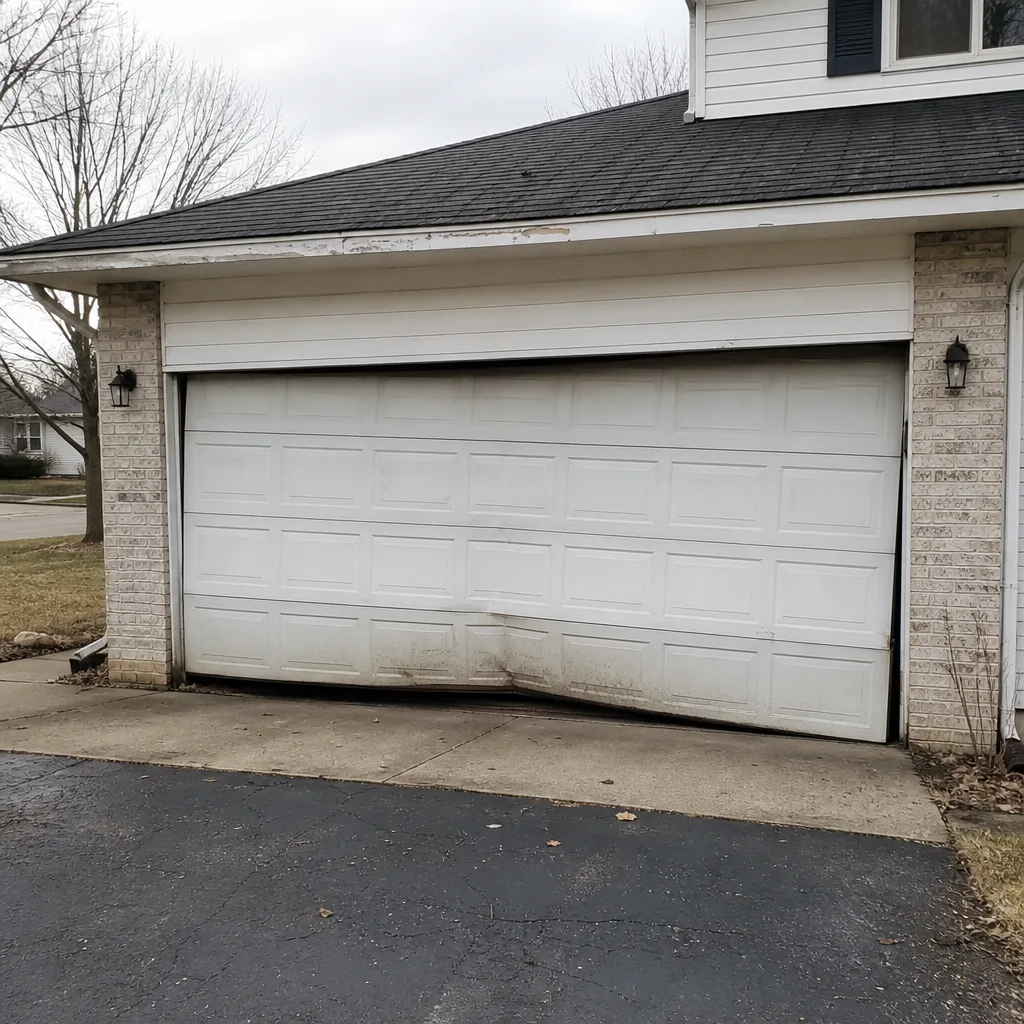
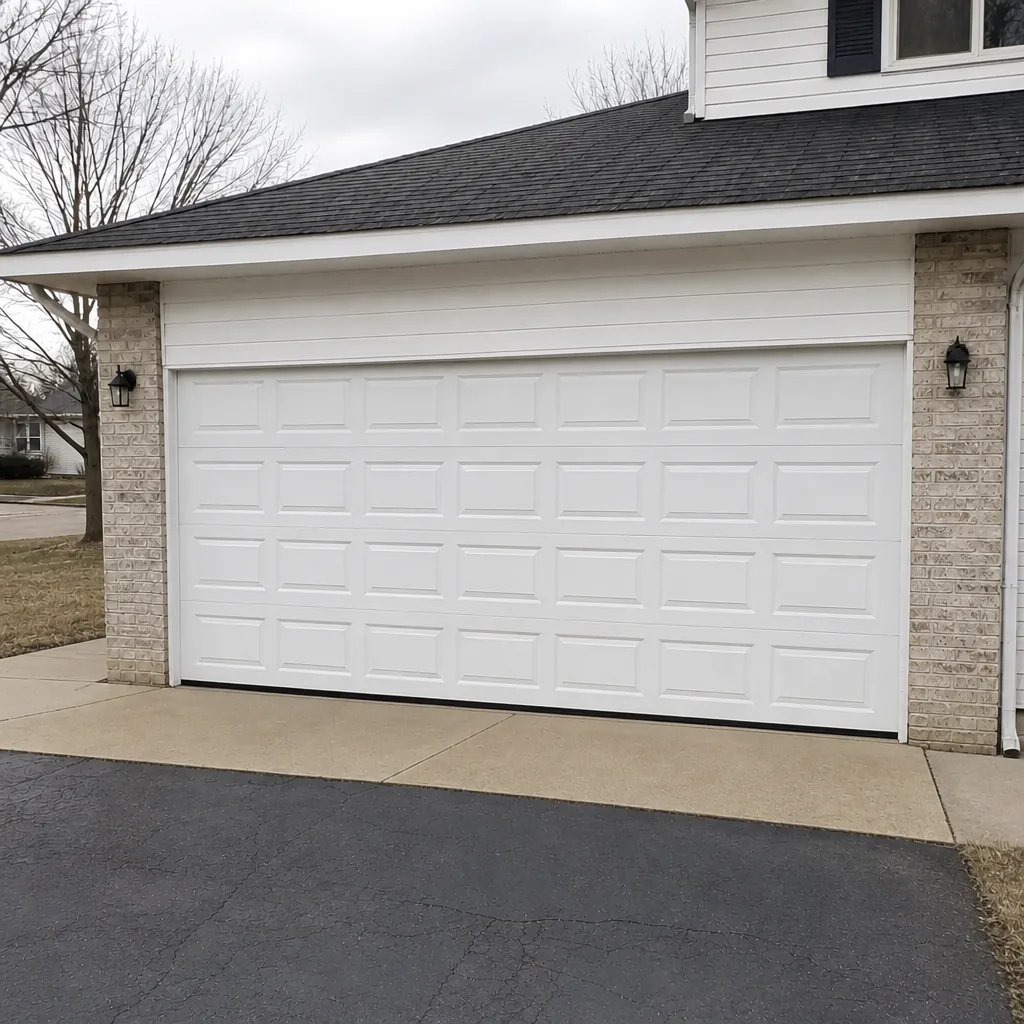
See the difference
 Before
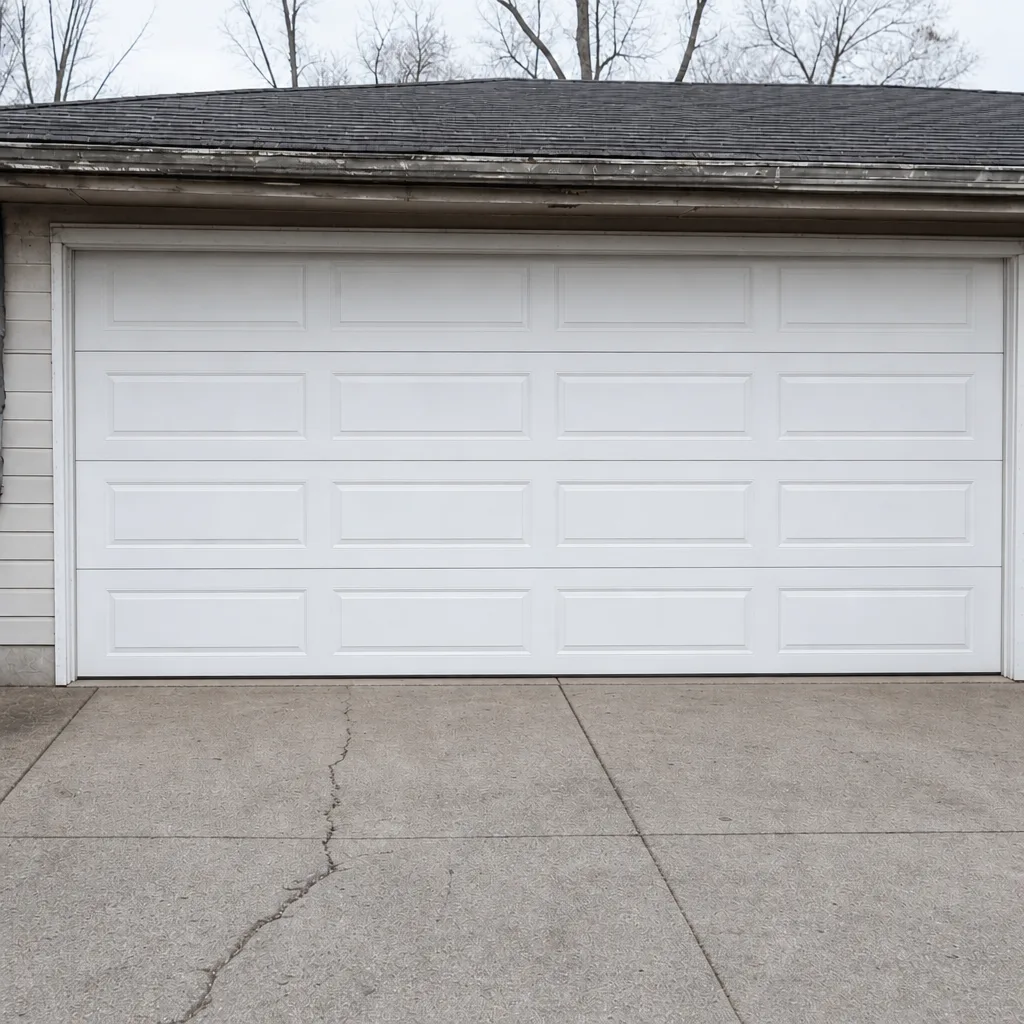 After
 Before
 After
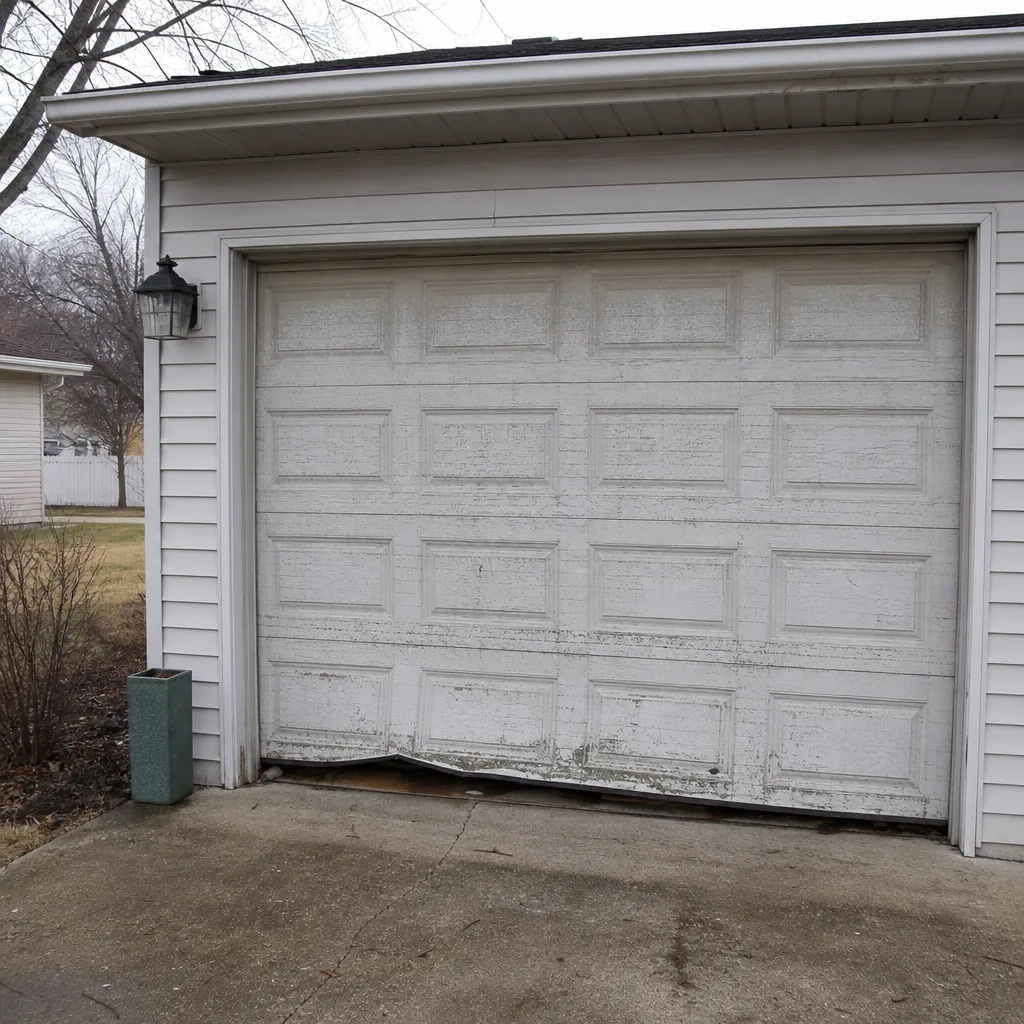 Before
 After
When to Call a Professional
Call a professional whenever the problem involves springs, cables, or a door that’s off its tracks. Those three are the components that can hurt someone, and no safe DIY version exists for them. Call immediately if you hear the loud bang of a spring snapping, if the door hangs crooked, or if the opener runs but the door stays put. Also call if the door is off-balance, reverses erratically, or fails the photo-eye test – a failing safety reverse is a door you can’t rely on with kids or cars in the drive. For the safe checks on this list, you’re fine to look and adjust. For everything past them, Blaine Garage Door Repair Pros offers free estimates in Blaine – call (877) 302-7764. We work on the brand you already have, whether it’s a Clopay steel door on a LiftMaster opener or a Wayne Dalton on a legacy Craftsman chain drive.
Frequently Asked Questions
Garage door spring repair in Blaine is set per job by a written estimate before any work begins, and a single spring is quoted separately from a matched pair because the pair costs more. The full scope depends on the spring type, the door weight, and whether the cables and drums need attention too. Call (877) 302-7764 for an exact quote – estimates are free.
Yes, same-day service is available for urgent failures. We answer 24/7, and fast dispatch runs 7am to 7pm, Sunday through Friday, so a broken spring or off-track door can usually be looked at the same day you call. Call (877) 302-7764 and we’ll confirm the next opening.
No. A door with a broken torsion or extension spring should not be run by the opener or lifted by hand. The spring was doing the lifting, so the opener now strains against the full weight and can strip its gear or drop the door. Leave it closed and call a technician.
A door that lifts a foot and reverses is usually hitting a force limit because the springs have lost tension or a cable is binding. Check the photo-eyes first – clean and realigned sensors can fix some reversals. If the eyes are fine and the door still reverses, it’s a spring or balance problem. Call (877) 302-7764 for an exact quote.
The written estimate we give you is the price. A technician diagnoses the system first, and the estimate is set and agreed before any work starts, so the invoice matches what you approved. If a different repair turns out to be needed once the door is inspected, we walk you through the options before touching anything. Call (877) 302-7764 – estimates are free.
The freeze-thaw cycle is the main reason. Water runs under the bottom seal and refreezes, the door sticks to the concrete, and the opener strains against it. Cold also stresses metal springs and cables, and grit from winter roads packs into rollers. Clearing ice from the threshold and keeping the seal intact goes a long way in Blaine.
The Bottom Line
Almost every garage door problem in Blaine comes back to springs, cables, tracks, or openers, and the fastest path to a fix is figuring out which one before touching anything. Safe checks – photo-eye alignment, limit switches, visible track obstructions – are yours to do. Spring and cable work belongs to a technician, because those parts carry stored force that no homeowner should handle. The freeze-thaw cycle here makes spring failure and seal freeze-down more common than in milder climates, so a door that feels heavy or reverses intermittently is a door to check now, not later. Name your brand – LiftMaster, Chamberlain, Genie, Clopay, Amarr, Wayne Dalton, Craftsman, or Raynor – and one call covers the door system and the opener together. Call (877) 302-7764. We answer 24/7. Fast dispatch from 7am to 7pm, Sunday through Friday.
Written by the team at Blaine Garage Door Repair Pros.